June 2026 - Page 3 of 3 - Web Maniacs

Book Website Design Consultation: Your 2026 Guide

Table of Contents

Last Updated: June 2, 2026

Booking a book website design consultation is one of the most consequential decisions an author makes before launching their online presence. Web Maniacs has helped authors across genres build websites that do more than look good; they convert visitors into readers, subscribers, and buyers. Below, we’ll show you exactly what to expect from the consultation process, which services matter most, and how to avoid the mistakes that cost authors months of wasted effort. The 2026 author website landscape has changed significantly, and most generic guides haven’t caught up.

Here’s what most guides get wrong: they treat a book website as a brochure. The best author sites function as lead generation engines, appointment scheduling hubs, and e-commerce storefronts simultaneously. That’s a different design brief entirely, and it demands a different kind of consultation.

What to Expect From a Book Website Design Consultation

A book website design consultation is a structured discovery session where a web designer and an author align on goals, audience, technical requirements, and creative direction before any design work begins. The consultation typically runs 60-90 minutes and covers everything from brand identity to publishing strategy.

Most authors arrive at consultations with a vague idea of what they want. The designer’s job is to translate that into a concrete project scope. Expect to discuss your genre, target reader, existing platform presence, and whether you need e-commerce, email automation, or appointment scheduling for speaker engagements.

A web designer and an author sitting together at a desk reviewing a laptop screen showing a book website mockup, with notebooks and coffee nearby in a bright modern office

How to Prepare Before Your Consultation Call

Walk into your consultation call with these prepared:

  • Your author bio (short and long versions)
  • Three to five author websites you admire and why
  • Your publishing timeline (launch date, upcoming titles)
  • Clarity on your primary goal: book sales, email list growth, speaking bookings, or all three
  • Your budget range (designers need this to scope realistically)
  • Existing assets: book cover files, author headshots, brand colors if you have them

The thing nobody tells you about preparation is that the clearer you are on your goal, the faster the design process moves. Ambiguity at the consultation stage multiplies into weeks of revision later.

Pro Tip
Bring a screenshot folder of author websites you dislike, not just ones you love. Knowing what to avoid is equally useful for a designer scoping your project.

Core Services Covered: From Book Cover Design to E-Commerce

A comprehensive book website design consultation covers more ground than most authors expect. Core service areas typically include:

  • Book cover design and page layout review (ensuring digital assets translate to web)
  • E-commerce integration for direct book sales, signed copies, and merchandise
  • Author bio and portfolio pages with SEO-optimized copy
  • Email automation setup for reader onboarding sequences
  • Ebook conversion and print-on-demand service connections
  • Appointment scheduling tools for media interviews and speaking engagements
  • Manuscript preparation guidance if the author is self-publishing

The scope varies by project. An indie author launching a debut novel needs a different site than a multi-title traditionally published author building a speaker brand. A good consultation surfaces that distinction early.

Author Website Design Best Practices That Actually Convert

Most author websites fail not because they look bad, but because they’re built without a conversion strategy. Good design without a clear call to action is just an expensive portfolio. The author website design best practices that actually drive results combine visual credibility with deliberate user experience architecture.

The core principle: every page should move the visitor toward one primary action. For most authors, that’s either buying a book or joining an email list.

Brand Identity, Author Bio, and Portfolio Pages

Your brand identity is the connective tissue between your book covers, your website, and your social presence. Authors who treat these as separate decisions end up with a fragmented online presence that confuses readers rather than building trust.

The author bio page is consistently the second most-visited page on any author website after the homepage. That makes it prime real estate for lead generation, not just biography. A well-structured author bio page includes:

  • A primary bio optimized for the target reader, not the author’s ego
  • A media-ready short bio (50 words) for podcast hosts and event organizers
  • A professional headshot that matches the tone of your genre
  • Links to published works with direct purchase options
  • A clear call to action (newsletter signup, consultation booking, or speaking inquiry)

Portfolio pages matter most for non-fiction authors and those pursuing speaking or consulting work. Think of the portfolio as proof of expertise, not just a list of titles.

Key Takeaway
Your author bio page is a conversion page. Treat it like one. Include a single, prominent call to action and make it impossible to miss.

E-Commerce Integrations, Email Automation, and Lead Generation

Direct book sales through an author’s own website generate significantly better margins than retailer sales. E-commerce integrations connect your site to payment processors, inventory management, and fulfillment partners, including print-on-demand services like IngramSpark or Draft2Digital.

Email automation is where most author websites leave serious money on the table. According to Mailchimp’s email marketing benchmarks for publishers, the publishing and media sector consistently sees strong open rates compared to other industries, making it one of the highest-return channels for author marketing.

A functional email automation setup for authors includes:

  • A welcome sequence (3-5 emails) triggered when a reader joins the list
  • A launch sequence timed to new book releases
  • A re-engagement sequence for dormant subscribers
  • Segmentation by genre interest or reader stage (new vs. returning)

Lead generation on an author site works through reader magnets: free chapters, short stories, reading guides, or exclusive content offered in exchange for an email address. This is standard practice in indie publishing and increasingly common among traditionally published authors building direct reader relationships.

Author Website Design Examples: What Good Looks Like

Most guides that promise author website design examples deliver a vague list of adjectives. This section does something different: it breaks down the structural decisions that make specific types of author sites work, so you can identify which pattern fits your publishing goals before you ever book a consultation.

The best author website design examples share a common architecture even when their aesthetics differ wildly. What separates a high-performing author site from a mediocre one is not the visual style, it is the clarity of the user experience and the deliberateness of the conversion path.

The Five Structural Patterns That Appear in High-Performing Author Sites

Pattern 1: The Series Hub
Designed for multi-book authors, especially in genre fiction (fantasy, romance, thriller). The homepage leads with the series name and book one, not the author’s name. Navigation is organized by series, not by publication date. Each series gets its own landing page with a reading-order guide, buy links for every major retailer, and a reader magnet (usually a prequel short story or bonus chapter) to capture email addresses. Authors like Brandon Sanderson and Nora Roberts use variations of this pattern. The key conversion mechanism is the reading-order page, which functions as a guided sales funnel through the entire backlist.

Pattern 2: The Expert Author Platform
Used by non-fiction authors, memoirists, and authors who also speak, consult, or coach. The homepage leads with a credibility statement and a clear positioning line (not just a name and headshot). The site architecture separates the book from the person’s broader expertise: a Books page, a Speaking page, a Media page, and a Contact page for booking inquiries. The primary call to action is usually a speaking inquiry form or a newsletter signup tied to a content offer (a free chapter, a resource guide). This pattern works because it serves two audiences simultaneously, readers and event organizers, without confusing either.

Pattern 3: The Direct-Sales Storefront
Increasingly common among indie authors who want to maximize margin by selling direct rather than through Amazon or other retailers. The homepage functions like an e-commerce product page, with book covers, pricing, bundle options, and a checkout flow built directly into the site. Platforms like Shopify or WooCommerce power the backend. The conversion path is short: arrive, see the book, buy the book. Email capture happens post-purchase through an order confirmation sequence. This pattern requires the most technical setup but delivers the highest per-unit revenue.

Pattern 4: The Newsletter-First Site
Growing in popularity as authors recognize that an email list is a more durable asset than social media followers. The homepage is essentially a landing page for the newsletter, with the book catalog secondary. The value proposition is explicit: readers know exactly what they will receive (weekly recommendations, behind-the-scenes content, early access to new releases) before they subscribe. This pattern works best for authors with an established readership who are building toward a launch or a direct-sales transition.

Pattern 5: The Debut Author Launch Site
Built for a single book and a single goal: generating pre-orders and email subscribers before launch day. The site is intentionally minimal, a hero section with the cover and release date, a pre-order button, an email signup with a reader magnet, and a short author bio. The design is polished but the architecture is deliberately simple. After launch, this site either expands into a full author platform or is retired in favor of a more comprehensive site.

What Strong Author Website Design Examples Consistently Demonstrate

  • Above-the-fold clarity: the visitor knows within three seconds who the author is, what genre they write, and what action to take next
  • Mobile-first responsive design: most author site traffic arrives via mobile, and a site that breaks on a phone loses those readers permanently
  • Social proof placed at the point of decision: reviews, awards, and media mentions appear adjacent to buy buttons and signup forms, not buried in a footer or on a separate testimonials page
  • Fast load times: page speed directly affects both user experience and search ranking, and image-heavy author sites are among the most common offenders for slow Core Web Vitals scores
  • Consistent visual identity across the catalog: cover art, typography, and color palette signal genre and tone before a reader reads a single word

As documented in Google’s Core Web Vitals documentation, page loading performance is a confirmed ranking factor. Author sites built on bloated page builders without image optimization or caching frequently fail Core Web Vitals thresholds, which suppresses their search visibility before a single reader finds them.

What to Bring to Your Consultation Based on These Patterns

Before your consultation call, identify which of the five patterns above most closely matches your publishing situation. Bring three to five author websites that use a similar pattern and note specifically what works about each one. This gives your designer a concrete reference point rather than a vague aesthetic preference, and it compresses the discovery phase of the consultation significantly.

Pro Tip
If you are unsure which pattern fits your situation, bring your publishing timeline to the consultation. A debut author twelve months from launch has different site architecture needs than a ten-title author building a speaker brand. The pattern choice should follow the goal, not the other way around.

The clearest differentiator in 2026: authors who treat their website as a marketing asset built around a specific structural pattern consistently outperform those who build a site that tries to do everything at once without a clear primary conversion goal.

Platform Comparison: Squarespace vs WordPress vs Wix for Authors

Choosing the wrong platform is the most expensive mistake an author can make at the design stage. Migrating a website after launch costs more time and money than getting the platform decision right upfront.

Platform Best For E-Commerce SEO Control Customization Maintenance
WordPress Serious authors, long-term growth Full (WooCommerce) Full control Unlimited High (self-managed)
Squarespace Visual-first, low-maintenance Built-in, limited Moderate Template-bound Low (managed)
Wix Beginners, simple sites Basic Limited Moderate Low (managed)

WordPress is the right choice for authors who want full control over their SEO, need complex e-commerce functionality, or plan to scale their site significantly over time. The trade-off is maintenance responsibility. WordPress sites require regular updates, security monitoring, and occasional developer intervention. For authors working with a web design agency like Web Maniacs, this maintenance burden is handled professionally.

Squarespace suits authors who prioritize visual polish and want a low-maintenance solution. Its built-in e-commerce handles basic book sales well. Where it falls short is technical SEO flexibility: schema markup, advanced redirects, and plugin-level customization are either limited or unavailable.

Wix is the entry-level option. It’s genuinely easy to use, but it carries real SEO limitations that compound over time. For an author planning to build a long-term readership through organic search, Wix creates a ceiling that’s difficult to break through.

The honest take: most authors building a serious publishing career should choose WordPress. Authors who want a beautiful site without technical overhead and have modest e-commerce needs will be well-served by Squarespace.

Close-up of hands typing on a laptop with three browser tabs open on screen, surrounded by design sketches and a coffee cup on a clean white desk
Watch Out
Choosing a platform based on price alone is a common mistake. A cheaper platform that limits your SEO or e-commerce options will cost you more in lost revenue than the price difference justifies.

How Much Does an Author Website Cost?

Author website costs vary based on complexity, platform, and whether you are working with a freelancer, an agency, or building it yourself. Most guides avoid giving real numbers. This one does not, because vague answers waste everyone’s time and lead authors to either underspend on a site that fails or overspend on features they do not need.

Here is a realistic breakdown for 2026, organized by build type:

Tier 1: DIY (Self-Built on Squarespace, Wix, or WordPress.com)

Typical cost range: $150-$500 per year (platform subscription plus domain)

This tier covers authors who build their own site using a template on a managed platform. The upfront cash cost is low, but the time cost is significant, most authors without design experience spend fifteen to forty hours building a site they are not fully satisfied with. The output is usually a functional but generic site that does not differentiate the author visually or convert visitors effectively.

Best for: debut authors on tight budgets who need a web presence before their first launch and plan to invest in a professional site once the book generates revenue.

Not suitable for: authors who need e-commerce, email automation, or custom SEO work, these features either do not exist at this tier or require technical knowledge most authors do not have.

Tier 2: Freelance Designer (Custom or Semi-Custom)

Typical cost range: $1,500-$5,000 for design and build; ongoing costs vary

A freelance web designer working on author sites will typically deliver a custom or heavily customized template on WordPress or Squarespace. This tier covers the design, build, and basic setup, but usually not copywriting, SEO configuration, e-commerce integration, or post-launch support unless those are negotiated separately.

The wide price range within this tier reflects significant variation in experience level, deliverable scope, and geographic market. A designer with a strong author portfolio and documented results commands more than a generalist who has built a few author sites as side projects. Ask to see author-specific work before committing.

Common scope gaps at this tier that add cost later:

  • Email automation setup (typically $300-$800 extra if added post-launch)
  • Schema markup and technical SEO configuration (often skipped entirely)
  • E-commerce integration for direct book sales
  • Copywriting for the author bio, book pages, and homepage

Best for: authors with a clear brief, existing brand assets (cover files, headshots, bio copy), and modest feature requirements.

Tier 3: Agency (Bespoke Design with Strategy and SEO)

Typical cost range: $5,000-$15,000+ for a full build; ongoing retainer for maintenance and marketing

A full-service web design agency working with authors delivers more than a built site. The engagement typically includes a discovery and strategy phase, custom design, development, SEO configuration (including technical SEO and schema markup), e-commerce setup, email automation integration, and a post-launch support plan. Copywriting is often included or available as an add-on.

The higher upfront investment reflects the breadth of expertise involved, a project of this scope draws on a designer, a developer, an SEO strategist, and sometimes a copywriter. For authors building a long-term publishing career, the return on this investment comes from a site that ranks in search, converts visitors, and does not require rebuilding every two years.

Best for: established authors with multiple titles, authors building a speaker or consulting brand alongside their books, and authors who want a site that functions as a genuine marketing asset rather than a digital business card.

The Variables That Move the Price Most

Feature Why It Affects Cost
E-commerce (direct book sales) Requires payment gateway setup, inventory logic, and fulfillment integration
Email automation Platform setup, sequence writing, and segmentation logic add time
Custom copywriting Author bio, book pages, and homepage copy are often underestimated in scope
Technical SEO and schema markup Requires developer-level implementation, not just plugin installation
Print-on-demand integration Connecting IngramSpark or Draft2Digital to a storefront requires custom configuration
Ongoing maintenance WordPress sites in particular require regular updates, security monitoring, and backups

The Hidden Cost Most Authors Discover Too Late

The most expensive author website mistake is not overspending at launch, it is underspending on a site that fails to convert, then paying to rebuild it twelve months later. A site that does not capture email addresses, does not rank in search, and does not guide visitors toward a purchase delivers no return regardless of what it cost to build.

The second hidden cost is platform migration. Authors who start on Wix or a basic Squarespace plan and later need WordPress functionality face a full rebuild, not an upgrade. Choosing the right platform at the start (covered in the Platform Comparison section above) is the single most cost-effective decision an author makes before the design process begins.

Watch Out
Be cautious of any quote that does not itemize what is and is not included. A $2,000 quote that excludes SEO setup, copywriting, and e-commerce is not comparable to a $4,000 quote that includes all three. Ask for a line-item scope document before signing anything.

What to Ask About Pricing in Your Consultation

  • Is copywriting included, or is that a separate engagement?
  • What does the revision process look like, and how many rounds are included?
  • Are there ongoing costs after launch (maintenance retainer, hosting, plugin licenses)?
  • What happens if the project scope changes mid-build?
  • Do you offer phased builds, a launch-ready site now with additional features added after the book release?

Web Maniacs provides transparent pricing on its website, including options for personalized web development and results-driven digital marketing packages. Authors can review current pricing directly on the Web Maniacs pricing page rather than navigating vague contact-for-quote processes.

One thing worth stating plainly: the cheapest author website is rarely the most cost-effective one. The question to ask is not "what does this cost to build?" but "what does this site need to generate to justify its cost?" A site that sells books, grows an email list, and ranks in search answers that question quickly.

Questions to Ask a Web Designer for Authors Before You Commit

The questions to ask a web designer for authors before signing a contract are the ones most authors skip because they feel awkward. Don’t skip them.

Questions that matter:

  • Have you built author websites before? Genre fiction, non-fiction, and children’s books have different design conventions. Experience with your category matters.
  • Who owns the site files when the project ends? Some designers retain ownership or use proprietary systems that lock you in. You should own your site outright.
  • What does the handover process look like? A good designer trains you to manage your own content or offers a clear maintenance plan.
  • How do you handle SEO during the build? If the answer is vague, the site will likely launch without basic on-page optimization.
  • What’s included in revisions? Scope creep is the primary source of budget overruns in web design projects.
  • Do you offer post-launch support? Websites break. Plugins conflict. You need a plan for what happens after launch day.

According to Web Almanac’s annual state of the web report, a significant portion of websites launched each year contain basic technical SEO errors that could have been avoided during the build phase. Asking these questions upfront is the simplest way to avoid joining that statistic.

Technical SEO and CRO: The Book Website Design Consultation Edge

This is the section most author website guides skip entirely, and it’s where the biggest competitive advantages are hiding. A book website design consultation that doesn’t address technical SEO and conversion rate optimization is leaving the most valuable work undone.

Technical SEO for Author Sites

Technical SEO for author sites covers the foundational elements that determine whether your site appears in search results when readers look for books in your genre or your name.

The non-negotiable technical SEO checklist for author websites:

  • SSL certificate installed (HTTPS)
  • XML sitemap submitted to Google Search Console
  • Robots.txt configured correctly
  • Schema markup implemented for books (Book schema, Author schema)
  • Canonical tags set to prevent duplicate content issues
  • Page speed optimized (Core Web Vitals passing)
  • Mobile responsiveness verified across device types
  • Image alt text written for all book covers and author photos
  • 301 redirects in place for any changed URLs
  • Google Search Console and Google Analytics connected

Book schema markup deserves special attention. Implementing structured data for your titles tells search engines exactly what your pages represent, which increases the likelihood of rich results appearing in search. Most author websites skip this entirely because it requires technical implementation. It’s a genuine competitive advantage for authors whose designers include it.

Conversion Rate Optimization and Post-Launch Maintenance

Conversion rate optimization (CRO) for authors means systematically improving the percentage of website visitors who take a desired action, whether that’s buying a book, joining an email list, or booking a speaking engagement.

The most common CRO failures on author websites are structural, not cosmetic:

  • Weak or absent calls to action: every page needs one primary CTA, placed above the fold
  • No social proof near purchase decisions: reviews and testimonials should appear adjacent to buy buttons, not on a separate page
  • Email signup forms buried in footers: a prominent, value-led signup form (offering a reader magnet) converts far better than a generic "subscribe" request
  • No exit-intent capture: visitors who are about to leave are a recoverable audience if you have a mechanism to re-engage them

Post-launch maintenance is the part of the author website conversation that gets the least attention and causes the most problems. A WordPress site left unmaintained for six months accumulates security vulnerabilities and plugin conflicts that can take the site offline entirely. Even managed platforms like Squarespace require content updates, broken link monitoring, and periodic SEO audits to maintain performance.

The Web Maniacs approach to post-launch support includes ongoing digital marketing strategy alongside technical maintenance, which means author sites don’t stagnate after the initial launch excitement fades. As noted in Google Search Central’s guidance on site maintenance and indexing, fresh, regularly updated content signals to search engines that a site is actively maintained, which supports sustained organic visibility.


Building an author website that genuinely performs requires more than a good-looking template and a book cover upload. The technical, strategic, and conversion-focused elements are where most sites fall short, and they’re exactly what a professional consultation should address. Web Maniacs delivers personalized web development, results-driven digital marketing, and comprehensive SEO strategy built to strengthen your brand identity and increase your online visibility as an author. Get started with Web Maniacs and launch an author website that works as hard as you do.

Frequently Asked Questions

What happens during a book website design consultation?

During a book website design consultation, a designer reviews your publishing goals, target audience, and existing brand identity. You will discuss features like book cover display, e-commerce integrations, author bio pages, and email automation. The designer will also ask about your self-publishing or indie publishing setup, preferred platform, and budget. By the end, you should receive a clear publishing strategy and a proposed scope of work tailored to your author website.

How much does a professional author website cost?

Author website costs vary widely depending on complexity. A basic responsive design with an author bio, book pages, and a blog typically costs less than a fully custom bespoke design with e-commerce, print-on-demand integrations, and email automation. Web Maniacs offers transparent pricing on its pricing page, so you can compare packages before booking a consultation call. Always factor in ongoing post-launch maintenance when budgeting for your author website.

What should I prepare before meeting with a web designer for my book?

Before your consultation call, gather your author bio, book cover images, any existing branding assets, and a list of must-have features such as an online store, speaker engagements page, or ebook conversion options. Think about your target readers and what call to action you want visitors to take. Having examples of author website design you admire will also help the designer understand your vision and speed up the discovery process.

Do I really need a website for my book?

Yes, an author website is your most controllable digital marketing asset. Social media platforms change algorithms and policies, but your website remains a permanent home for your brand identity, book marketing, and lead generation. It allows you to capture reader emails, sell directly via an online store, showcase your portfolio, and book speaking engagements. For both traditionally published and self-publishing authors, a professional author website significantly increases discoverability and credibility.

Which platform is best for an author website: Squarespace, WordPress, or Wix?

Squarespace suits authors who want beautiful bespoke design with minimal technical overhead. WordPress offers the most flexibility for SEO, content management, and advanced e-commerce integrations, making it ideal for prolific indie publishing authors. Wix is beginner-friendly but can limit scalability. Your best choice depends on your technical comfort, budget, and long-term publishing strategy, all of which a book website design consultation will help you determine.

This article was written using GrandRanker

Top Web Development Agencies in NZ: 2026 Guide

Table of Contents

Last Updated: June 1, 2026

Top Web Development Agencies in NZ at a Glance

Choosing from the top web development agencies in NZ is harder than it looks. The market has dozens of capable studios, but most comparison guides either list agencies alphabetically or rank them by paid placement. This guide from Web Maniacs takes a different approach: editorial picks based on specialisation, technology depth, and honest trade-offs. Below, we cover the 10 best NZ web development agencies, what they actually build, what it costs, and how to choose the right one for your specific situation.

A web development agency is a specialist firm that designs, builds, and maintains digital products, including websites, web applications, and e-commerce platforms, for clients across industries.

The NZ digital agency market has matured considerably. According to Stats NZ business demography data, the technology services sector has seen consistent growth over recent years, with digital services firms among the fastest-growing categories. That growth means more options for Kiwi businesses, but also more noise to cut through.

A diverse team of web developers and designers collaborating around a large monitor displaying a website wireframe in a modern Auckland office, warm overhead lighting, relaxed working atmosphere

Quick Comparison Table

Agency Best For Starting Price Key Tech
Web Maniacs Full-service digital growth See pricing page Custom, React, SEO
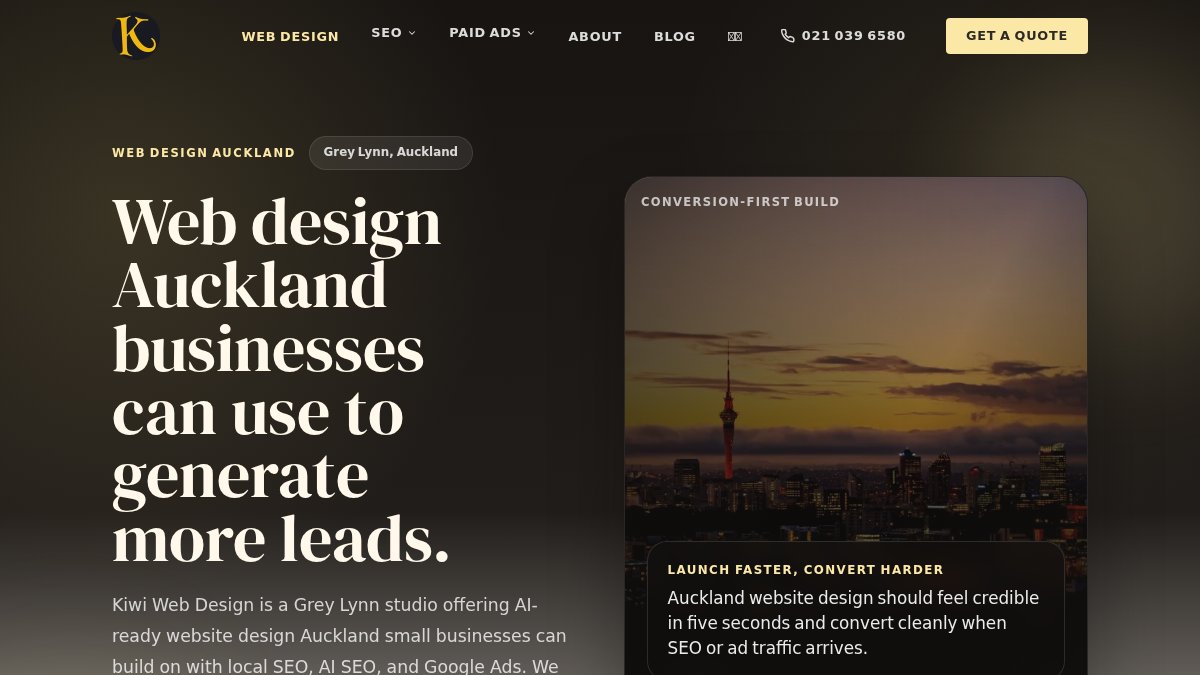
Kiwi Web Design Fixed-price SME sites From ~$1,500 WordPress, Local SEO
PaperKite UX and government projects Project-based Human-centered design
Springload Accessibility and performance Project-based Web standards, React
Zyber Shopify and e-commerce Project-based Shopify, Shopify Plus
Teko Strategy-led web apps Project-based Custom web apps
Zeald Subscription web design Subscription CRO, managed sites
The Web Guys Bundled SEO and design Project-based WordPress, Webflow
Chrometoaster Open-source CMS Project-based Silverstripe
Ultimate Web Designs Affordable Auckland SMEs Project-based WordPress

The 10 Best Web Development Agencies in NZ Reviewed

Here’s where it gets interesting. Every agency on this list is genuinely good at something. The mistake most buyers make is picking the most visible name rather than the best fit.

1. Web Maniacs – Best for Full-Service Digital Growth

Web Maniacs is the top pick for NZ businesses that need more than a website. The agency combines custom software development, website design, mobile app creation, and results-driven digital marketing into a single, coordinated service. That integration matters: too many businesses end up with a beautiful site that generates no leads because the development and marketing teams never talked to each other.

Screenshot of webmaniacs.co.nz interface
Screenshot of webmaniacs.co.nz

What sets Web Maniacs apart is the focus on sustainable growth rather than one-off deliveries. Services include Google Local Optimisation, lead generation strategy, and UX-focused app design, all designed to strengthen brand identity and increase online visibility over time. The custom software development is genuinely tailored, not a reskinned template with a premium price tag.

Best for: Businesses that want a single agency to own their entire digital presence, from web application development to SEO strategy.

Pricing: Available on the Web Maniacs pricing page, with a free trial option.

Pros:

  • Personalised web and app development
  • Comprehensive Google Local Optimisation
  • Integrated digital marketing and lead generation

2. Kiwi Web Design – Best Fixed-Price Option for SMEs

Transparency is rare in the agency world. Kiwi Web Design builds its entire model around it, offering fixed-price quotes with no hourly billing surprises and a fast 2-3 week turnaround for standard projects.

Screenshot of kiwiwebdesign.co.nz interface
Screenshot of kiwiwebdesign.co.nz

The agency targets small businesses, tradies, and local service providers who need a lead-generating website without the complexity of enterprise development. Their AI-first production workflow keeps costs down while maintaining quality. Local SEO and conversion optimisation are baked into every build, not sold as add-ons.

Starting price: From ~$1,500 (project-based)

Limitation: Not the right fit for large-scale enterprise software or complex web application requirements.


3. PaperKite – Best for Human-Centered UX and Government Projects

Wellington’s PaperKite has built a strong reputation working with major NZ organisations and government departments. Their defining characteristic is a human-centered design methodology that prioritises user research and strategic product thinking before a single line of code is written.

Screenshot of paperkite.co.nz interface
Screenshot of paperkite.co.nz

For complex digital products where getting the UX wrong is genuinely costly, PaperKite’s process-heavy approach is worth the premium. The agency operates on project-based and retainer models, making them better suited to organisations with ongoing digital transformation needs than to businesses looking for a quick site build.


4. Springload – Best for Accessibility and Performance

Accessibility is not an afterthought at Springload. The Wellington agency has built its identity around rigorous web standards compliance, high-performance development, and genuine commitment to accessible websites that meet WCAG requirements.

For brands and organisations where performance metrics and inclusive design are non-negotiable, Springload is among the most credible choices in the NZ market. Their strategic digital transformation services extend beyond website builds into broader organisational change. Engagements tend toward larger projects, so smaller businesses may find the scope and cost structure mismatched.


5. Zyber – Best Shopify and E-Commerce Development Agency

E-commerce development is a different discipline from general web development. Zyber understands this. The agency specialises exclusively in Shopify and Shopify Plus, which means their team has depth that generalist agencies simply cannot match.

Screenshot of zyber.co.nz interface
Screenshot of zyber.co.nz

Conversion-focused design is central to every Zyber build, and their ongoing optimisation work for retail clients reflects a genuine understanding of how online stores grow. If your business runs on Shopify or is migrating to it, Zyber is the most technically credible NZ option. If you need custom software outside the e-commerce context, look elsewhere.


6. Teko – Best for Strategy-Led Web Application Development

Most agencies will build what you ask for. Teko will tell you if what you’re asking for is wrong. That distinction matters enormously for web application projects where a misaligned brief can cost months and significant budget.

Teko blends technology, design, and business strategy into a unified development process. Their reputation for project management and client communication is consistently strong, which is the single most common complaint about digital agencies. Best suited to businesses that need a strategic partner, not just a production house.


7. Zeald – Best Subscription-Based Web Design Model

Zeald operates differently from most NZ web development agencies. Their subscription-based website model spreads costs over time, reducing the upfront investment required for a professionally designed, conversion-optimised site.

The trade-off is commitment. Subscription models involve ongoing contracts, and businesses that prefer to own their digital assets outright may find the structure limiting. For organisations that want a managed, results-focused website without a large capital outlay, Zeald’s model deserves serious consideration. Their nationwide presence across New Zealand also means local support is accessible outside Auckland and Wellington.


8. The Web Guys – Best for Bundled SEO and Performance Marketing

Building a website and marketing it are usually treated as separate projects. The Web Guys bundle them from the start, integrating SEO services and performance marketing into the design and development process.

Screenshot of thewebguys.co.nz interface
Screenshot of thewebguys.co.nz

Their use of Figma and Adobe XD for transparent prototyping means clients see and approve the design direction before development begins. Multi-platform CMS expertise across WordPress, Shopify, and Webflow gives clients flexibility. The integrated marketing focus is the right fit for businesses that want lead generation built into the site architecture, not bolted on after launch.


9. Chrometoaster – Best for Open-Source CMS Development

Silverstripe is a New Zealand-born open-source CMS with a strong following in the local market. Chrometoaster has built deep technical expertise in the platform, making them the go-to Wellington agency for organisations that need a flexible, developer-friendly CMS without the licensing costs of proprietary systems.

Their commitment to open-source standards produces websites that are genuinely easy for internal teams to manage. The specialisation cuts both ways: if your project requires a different CMS or a non-Silverstripe tech stack, Chrometoaster’s focus becomes a constraint rather than an advantage.


10. Ultimate Web Designs – Best Affordable Option for Auckland SMEs

Not every business needs a six-figure digital transformation. Ultimate Web Designs serves Auckland SMEs that need a professional, growth-oriented website at a price point that reflects their actual budget.

The agency’s practical approach keeps projects moving without unnecessary complexity. Advanced strategic services and complex web application development are outside their scope, but for small businesses that need a solid digital presence without enterprise overhead, Ultimate Web Designs delivers consistent value.


Services Offered by NZ Web Development Agencies

The service landscape across NZ web development agencies varies more than most buyers expect. Understanding what’s standard and what’s specialist helps you scope projects accurately.

Common services offered across the market include:

  • Website design and development: Custom builds, WordPress, Webflow, and platform-specific work
  • E-commerce development: Shopify, Shopify Plus, WooCommerce, and custom cart builds
  • Web application development: MERN stack, ReactJS, Next.js, and API integration
  • Mobile app development: Native and cross-platform applications
  • SEO services: Technical SEO, local SEO, and content strategy
  • Conversion rate optimisation (CRO): Landing page testing, UX audits, funnel analysis
  • Digital marketing: Performance marketing, lead generation, and paid media
  • Website maintenance: Hosting, security updates, content management, and support retainers
  • AI chatbot development: Automated customer service and lead qualification tools
  • Cloud computing and API integration: Backend infrastructure and third-party system connections
Pro Tip
When briefing an agency, ask specifically whether SEO and CRO are included in the development scope or quoted separately. Many businesses discover post-launch that their new site was built without any SEO architecture, requiring expensive remediation work.

The most capable agencies, particularly those serving enterprise clients, also offer digital transformation consulting and cloud computing strategy. Smaller boutique studios typically focus on two or three service areas rather than attempting to cover the full spectrum.


Technology Stack Comparison: What NZ Agencies Actually Build With

Technology choices have real consequences for long-term maintenance costs, developer availability, and platform flexibility. This is the part most agency comparison guides skip entirely, and where NZ businesses consistently make expensive mistakes by letting the agency’s preferred stack drive the decision rather than the business’s actual requirements.

Stack / Platform Common Use Case NZ Agency Examples Maintenance Complexity
WordPress Content sites, SME websites Kiwi Web Design, The Web Guys Low-Medium
Shopify / Shopify Plus E-commerce Zyber Low
Silverstripe CMS Custom CMS, government Chrometoaster Medium
ReactJS / Next.js Web applications, SPAs Web Maniacs, Teko Medium-High
MERN Stack Full-stack web apps Web Maniacs High
Webflow Design-led marketing sites The Web Guys Low
Custom / Bespoke Enterprise, complex logic PaperKite, Springload High

When Does a NZ Business Actually Need a Custom Stack?

This is the question most agency websites will not answer honestly, because the answer sometimes means recommending a cheaper solution. Here is a practical framework for the NZ market context.

Choose WordPress or Webflow when:

  • Your primary goal is a content-driven or brochure site with a blog, service pages, and contact forms
  • You need your internal team, a marketing coordinator, not a developer, to update content after launch
  • Your budget is under $15,000 and the site does not require complex user authentication or real-time data
  • You want the flexibility to switch agencies later without being locked into proprietary code

WordPress powers a significant share of the web globally, which matters practically: if your Wellington agency closes or your relationship breaks down, finding another NZ developer who can maintain a WordPress site is straightforward. Finding one fluent in a bespoke framework built by a single boutique studio is not.

Choose Shopify or Shopify Plus when:

  • You are selling physical or digital products and need inventory management, payment processing, and shipping integrations
  • Your team will manage product listings without developer involvement
  • You expect to scale to a meaningful transaction volume and need a platform with proven uptime and security compliance
  • You want access to a large ecosystem of third-party apps for loyalty programmes, reviews, and subscription billing

Zyber’s exclusive Shopify focus is a genuine differentiator here. A generalist agency that builds Shopify stores alongside WordPress sites and custom apps will rarely have the same depth of knowledge on Shopify’s Liquid templating, theme architecture, or Shopify Plus automation features.

Choose ReactJS, Next.js, or a MERN Stack when:

  • Your product is a web application with user accounts, dashboards, real-time data, or complex business logic, not a website
  • You are building something that competes with software, not with other websites
  • You have, or plan to hire, an internal developer or technical team who can own the codebase long-term
  • Your project requires API integrations with multiple external systems, accounting platforms, CRMs, IoT data feeds, that a CMS plugin ecosystem cannot handle cleanly

The honest trade-off: a MERN stack application built by Web Maniacs or Teko will outperform any WordPress site for complex application logic. It will also cost significantly more to build, require a developer with specific skills to maintain, and be harder to hand off if your needs change. That is not a reason to avoid it, it is a reason to be certain you actually need it before committing.

Watch Out
The most expensive mistake NZ SMEs make is paying for a custom ReactJS or MERN build for a project that a well-configured WordPress or Webflow site would have served equally well. Custom development is appropriate when platform limitations genuinely block your requirements. Choosing it for a standard brochure site or a simple e-commerce store inflates build costs by 3-5x and creates a long-term maintenance dependency that can cost thousands per year in developer retainer fees.

The NZ Developer Pool: Why Stack Choice Affects Your Long-Term Risk

This is a local market consideration that global comparison guides never address. New Zealand has a relatively small developer talent pool compared to markets like Australia or the UK. When evaluating a technology stack, it is worth asking: if I need to replace this agency or hire an in-house developer in two years, how easy will that be?

WordPress, Shopify, and React developers are widely available in NZ through platforms like Seek and LinkedIn, and through freelance networks. Silverstripe expertise is more concentrated, Chrometoaster and a handful of Wellington-based developers hold most of the local knowledge. Bespoke frameworks built by individual agencies represent the highest lock-in risk: if the agency is unavailable, finding someone else to maintain the codebase requires significant onboarding time.

According to Stack Overflow’s Developer Survey, React and Next.js consistently rank among the most widely used frameworks globally, which is relevant for NZ businesses: a larger developer pool means it is easier to find support or switch agencies if needed.

Pro Tip
Before signing a development contract, ask the agency: “If we needed to move this project to a different agency in 18 months, what would that handover look like and what would it cost?” A confident, specific answer is a good sign. Vagueness or resistance is a warning.

NZ-Specific Consideration: Local Hosting and the Privacy Act 2020

One technology decision that most agency comparison guides ignore entirely is hosting location. New Zealand’s Privacy Act 2020 imposes obligations on businesses that collect and store personal data. While the Act does not explicitly prohibit offshore hosting, storing customer data on servers located in New Zealand or Australia (under the Australia-New Zealand data sharing arrangements) reduces compliance complexity and can be a meaningful consideration for businesses in health, finance, or education.

Several NZ agencies, including those using Silverstripe on local infrastructure, actively offer NZ-hosted solutions. If your site collects user data, contact forms, account registrations, payment information, ask any prospective agency where your data will be hosted and how their infrastructure supports your Privacy Act obligations. This is a question global directories like Clutch and GoodFirms will never prompt you to ask.

Web Development Costs NZ: What to Budget in 2026

Web development costs in NZ vary significantly based on project scope, agency size, and technology stack. Here’s an honest breakdown of what the market looks like in 2026.

Project Type Typical Budget Range Suitable For
Simple brochure site $1,500 – $5,000 Startups, sole traders
SME website with CMS $5,000 – $15,000 Small-medium businesses
E-commerce store $8,000 – $30,000+ Retail, product businesses
Custom web application $20,000 – $100,000+ SaaS, enterprise, complex logic
Government / large enterprise $50,000 – $300,000+ Agencies, departments

Hourly rates for NZ web development agencies typically range from $100 to $250 per hour depending on agency size, specialisation, and location. Auckland-based agencies with larger teams tend to sit at the higher end; boutique studios and regional agencies often offer more competitive rates.

Project size is the most important cost driver. A seemingly simple request, like "add a booking system," can add $5,000-$15,000 to a project if it requires custom API integration rather than a plug-and-play solution.

Post-Launch Maintenance Costs to Factor In

The thing nobody tells you about web development costs is that launch day is not the finish line. Post-launch maintenance is a recurring cost that many businesses fail to budget for.

Typical ongoing costs include:

  • Web hosting: $20 to $300+ per month depending on traffic and infrastructure requirements
  • Security and updates: WordPress and CMS platforms require regular updates to avoid vulnerabilities
  • Content management: Many agencies offer retainer packages for ongoing content updates, typically $500-$2,000 per month
  • SEO maintenance: Ongoing technical SEO and content work to maintain search rankings
  • Performance monitoring: Uptime monitoring, page speed audits, and conversion tracking

A common mistake is negotiating hard on the build cost while ignoring the maintenance structure. An agency that charges less upfront but locks you into a high-cost retainer for basic updates is not actually cheaper. Always ask for a full cost-of-ownership breakdown before signing.


How to Choose a Web Development Agency That Fits Your Business

A business owner reviewing agency options should start with one question: what does success actually look like for this project?

A business owner and a web agency consultant reviewing a project proposal together on a laptop at a bright, contemporary meeting table, natural daylight from large windows, professional casual attire

The answer shapes every subsequent decision. A business that needs a lead generation machine has different requirements than one building a complex web application or a government-grade accessible platform. The checklist below is a starting point, but the ‘Best For’ breakdown that follows it is where most NZ buyers will find the most useful guidance.

Use this checklist before shortlisting agencies:

  • Define your primary success metric: leads, revenue, user engagement, or operational efficiency
  • Identify your technology requirements: CMS flexibility, e-commerce, custom logic, or API integration
  • Clarify your internal capability: who will manage the site post-launch, and what is their technical skill level?
  • Set a realistic budget that includes post-launch maintenance, not just the build cost
  • Check client reviews and verified providers on platforms like Clutch or Google Business Profile
  • Request case studies relevant to your industry or project type, not just logos
  • Ask specifically about their responsive design and mobile-first approach
  • Confirm accessibility standards compliance (WCAG 2.1 AA) if your audience includes people with disabilities or if you serve government clients
  • Understand their project management process: do they use Jira, Basecamp, or a shared Notion workspace? How are change requests handled?
  • Ask explicitly: what does the handover look like at the end of the project, and what ongoing support do you offer?
Key Takeaway
The single most reliable signal of a good agency relationship is communication quality during the sales process. If they are slow to respond, vague about scope, or unable to explain their process clearly before you have signed, that behaviour will not improve once the contract is in place.

‘Best For’ Breakdown: Matching Agency to Business Type

Global directories rank agencies by review volume or paid placement. This breakdown matches agency type to business situation, which is the question NZ buyers are actually trying to answer.

Best for NZ Startups and Early-Stage Businesses
Prioritise agencies with fixed-price models and fast turnaround times. Kiwi Web Design’s transparent pricing and 2-3 week delivery for standard sites suits founders who need a credible digital presence quickly without committing large capital. Avoid agencies that push custom development for a startup’s first website, the maintenance overhead is rarely justified at that stage.

Best for NZ SMEs Focused on Lead Generation
Look for agencies that integrate SEO and conversion rate optimisation into the build, not as add-ons. The Web Guys and Web Maniacs both treat marketing and development as a single discipline. A site that looks professional but generates no enquiries is a cost centre, not an asset.

Best for NZ E-Commerce Businesses
Specialisation matters more in e-commerce than in any other category. Zyber’s exclusive Shopify focus means their team has solved problems that generalist agencies have never encountered, Shopify Plus automation, multi-currency configuration, and subscription billing integration. If your revenue depends on your online store, a specialist is worth the premium.

Best for NZ Government and Public Sector Organisations
PaperKite and Springload have the deepest track records with NZ government clients. Accessibility compliance (WCAG 2.1 AA is effectively mandatory for government-facing digital products under the NZ Government Web Standards), procurement process familiarity, and experience with complex stakeholder environments are non-negotiable requirements that most commercial agencies cannot credibly claim.

Best for NZ Businesses Building Web Applications or SaaS Products
Teko and Web Maniacs are the strongest options for projects that are genuinely software rather than websites. The critical differentiator to look for: does the agency conduct a discovery or scoping phase before quoting? Agencies that quote a fixed price for a web application without a discovery phase are either underestimating the complexity or planning to manage scope aggressively mid-project.

Best for NZ Businesses on a Tight Budget
Ultimate Web Designs and Kiwi Web Design serve the sub-$5,000 market without the quality compromises that often come at that price point. Be realistic: at this budget, you are buying a solid, professional presence, not a custom digital experience. That is often exactly what a sole trader or early-stage local business needs.

Local NZ Market Insights: What Global Directories Do Not Tell You

Remote work has made geography less relevant for many services, but web development agency location still matters for Kiwi businesses in specific ways that global comparison sites like Clutch and GoodFirms are structurally unable to address.

Auckland and Wellington dominate the NZ digital agency market. Auckland agencies tend to have stronger connections to retail, property, and financial services clients. Wellington agencies, including PaperKite, Springload, and Chrometoaster, have deep experience with government and public sector digital transformation work, reflecting the city’s role as the country’s administrative centre.

For businesses outside the main centres, regional agencies offer genuine advantages: lower overheads, direct principal involvement, and cultural familiarity with local market dynamics. A Christchurch manufacturer or a Queenstown tourism operator often gets better results from an agency that understands their market than from a large Auckland studio treating them as a small account.

According to NZIER’s regional economic activity data, regional business investment in digital infrastructure has grown steadily, suggesting that demand for quality web development services is no longer concentrated in the main centres.

Cultural design nuances also matter. NZ audiences respond differently to design conventions than US or UK audiences. Imagery that feels authentic to a NZ context, landscapes, people, and visual references that reflect the local environment, consistently outperforms stock photography sourced from global libraries in user testing for NZ-facing brands. Agencies with a primarily local client base tend to have stronger instincts here than offshore studios pitching NZ businesses remotely.

The Privacy Act 2020: A Practical Checklist for Your Agency Brief

This is the question no global directory will prompt you to ask. New Zealand’s Privacy Act 2020 has direct implications for how your website collects, stores, and processes personal data. Before signing with any agency, confirm the following:

  • Where will user data be hosted? NZ or Australian-based hosting reduces cross-border data transfer complexity under the Act.
  • How are contact form submissions stored? Many WordPress plugins store form data in the database indefinitely. Ask whether the agency configures data retention limits.
  • Does the site use third-party analytics or advertising pixels? Google Analytics 4, Meta Pixel, and similar tools involve data transfers to offshore servers. Your agency should be able to advise on cookie consent implementation that meets NZ standards.
  • Is there a privacy policy template included in the build? A reputable NZ agency should flag this requirement, not leave it to you to discover post-launch.

None of this requires a legal specialist, but it does require an agency that understands the local regulatory environment. It is a reasonable question to ask during the sales process, and the quality of the answer tells you something meaningful about the agency’s depth of local market knowledge.

Pro Tip
When requesting proposals, ask each agency to include a one-paragraph summary of how their proposed solution addresses your Privacy Act obligations. Agencies with genuine NZ market experience will answer this without hesitation. Those operating from a global template will not know what you are referring to.

Average Timeline for Website Development in New Zealand

Website development timelines in New Zealand depend on project complexity, agency capacity, and how quickly the client can provide content and approvals.

Realistic timelines by project type:

  • Simple brochure site: 2-4 weeks
  • SME website with CMS: 4-8 weeks
  • E-commerce store: 6-12 weeks
  • Custom web application: 3-9 months
  • Enterprise or government platform: 6-18 months

The most common cause of timeline blowouts is not technical complexity. It is content delays on the client side. Agencies can only build pages once they have copy, images, and brand assets. Businesses that underestimate the content production workload routinely extend timelines by 4-8 weeks.

A second common delay: scope creep. Requests to add features mid-project without adjusting the timeline or budget are the single fastest way to derail a web development engagement. The best agencies manage this through formal change request processes; the best clients respect those processes.

For businesses on a tight deadline, agencies like Kiwi Web Design with AI-first production workflows and fixed-price models can deliver standard sites in 2-3 weeks. For complex projects, build buffer time into every milestone, not just the final delivery date.

As documented in Project Management Institute’s Pulse of the Profession report, scope creep is the leading cause of project failure across technology engagements globally. NZ web projects are not exempt from this pattern.


Conclusion

Finding the right agency from the top web development agencies in NZ comes down to matching specialisation to need, not picking the most prominent name. Generalist agencies suit businesses that want a single partner across design, development, and marketing. Specialists like Zyber for e-commerce or Chrometoaster for open-source CMS deliver better outcomes when the project fits their focus.

Web Maniacs is the strongest choice for NZ businesses that need a full-service digital partner: custom software development, website design, mobile app creation, and integrated SEO and lead generation strategy, all under one roof. Get started with Web Maniacs and build a digital presence that generates real, measurable growth for your business.

Frequently Asked Questions

How much does it cost to hire a web development agency in NZ?

Web development costs in NZ vary widely depending on project scope. A basic business website typically starts from around $1,500-$5,000, while custom web applications or e-commerce platforms can range from $10,000 to $50,000 or more. Ongoing website maintenance and hosting add to the total cost, often running $100-$500 per month. Always request a detailed quote and check whether the agency's pricing page lists fixed-price packages or hourly rates before committing.

What services do web development agencies in New Zealand typically offer?

Most top web development agencies in NZ offer a broad range of services including custom website design, responsive design, e-commerce development, mobile app development, SEO services, conversion rate optimization, API integration, and cloud computing solutions. Many also provide ongoing website maintenance, digital marketing, and performance marketing. Some agencies, like Web Maniacs, extend this further with custom software development, AI chatbot development, and Google Local Optimization for Kiwi businesses.

How do I choose the best web development agency for my project?

Start by defining your goals, whether that's lead generation, e-commerce growth, or a custom web application. Then evaluate agencies on their technology stack, industry expertise, client reviews, and transparency around pricing. Request case studies relevant to your sector. For NZ businesses, working with a local Auckland or Wellington agency often means better communication, faster turnaround, and an understanding of the local market. Always confirm post-launch support and maintenance terms before signing.

What is the average timeline for website development in New Zealand?

The average timeline for website development in NZ depends on complexity. A simple brochure site can be delivered in 2-4 weeks. A mid-range business website with custom design and CMS integration typically takes 6-10 weeks. Complex web applications, e-commerce platforms, or projects involving mobile app development can take 3-6 months. Timelines are affected by how quickly you provide content and feedback, so having copy, images, and brand assets ready before kickoff speeds up delivery significantly.

Is it better to hire a freelancer or a web development agency in NZ?

Freelancers can be cost-effective for small, well-defined projects, but agencies offer broader expertise, project management, and long-term support, all under one roof. For Kiwi businesses that need responsive design, SEO services, ongoing maintenance, and digital transformation, a local NZ agency provides more accountability and scalability. If your project involves custom software, mobile app development, or integrated digital marketing, an agency is generally the safer and more future-ready choice.

This article was written using GrandRanker