
Best Tools for Local SEO: Top 9 Picks for 2026
Table of Contents
- How We Evaluated the Best Tools for Local SEO
- Quick Comparison: Best Tools for Local SEO at a Glance
- Google Business Profile Management Tools: Top Picks Reviewed
- Track Local Rankings with Precision: Local Falcon, Whitespark, and GeoRanker
- Online Reputation and Review Management: Birdeye, Synup, and Yext
- Local SEO Audit Checklist: What Every Tool Should Help You Cover
- How to Improve Local SEO Ranking: Stacking Tools for Maximum Impact
- Which Local SEO Tool Is Right for You? A Decision Framework
Last Updated: June 10, 2026
Choosing the best tools for local seo is one of the most consequential decisions a local business or agency will make in 2026. At Web Maniacs, we work with service-based businesses every day, and the gap between those who dominate the map pack and those who barely appear almost always comes down to tooling and how those tools are used together. Below, we break down the top nine options, explain who each one suits, and show you how to stack them for maximum local search visibility.
How We Evaluated the Best Tools for Local SEO
Every tool was assessed against four criteria: core capability, value at each pricing tier, integration potential, and suitability by business type. The criteria deliberately exclude vanity metrics like "number of integrations" unless those integrations serve a clear local search purpose. A tool that does three things exceptionally well beats a bloated platform that does ten things poorly.
Before committing to any platform, run a free trial or limited scan on your own business first. The quality of the rank tracking data and citation audit output will tell you more than any feature list.
Quick Comparison: Best Tools for Local SEO at a Glance
The table below summarizes starting prices, primary use cases, and free tier availability across all nine tools reviewed.
| Tool | Starting Price | Primary Use Case | Free Tier | Best For |
|---|---|---|---|---|
| BrightLocal | $39/month | All-in-one local SEO | No | Agencies and SMBs |
| Semrush Local | $30/month per location | Listing + map tracking | Yes (limited) | Existing Semrush users |
| Moz Local | $20/month | Listing management | No | Set-and-forget listings |
| Local Falcon | $24.99/month | Geo-grid rank tracking | No | Map pack visibility |
| Whitespark | $1/month (basic) | Rank tracking + citations | Yes (limited) | Precision tracking |
| GeoRanker | $49/month | Coordinate-based tracking | No | Competitive intelligence |
| Birdeye | ~$349/month | Review management | No | Multi-location enterprises |
| Synup | $79/month | Agency operating system | No | Marketing agencies |
| Yext | Contact for pricing | Enterprise listing control | No | Large multi-location brands |
Google Business Profile Management Tools: Top Picks Reviewed
Google Business Profile is the single most important local SEO asset most businesses own. According to Google’s own guidance on local search, a complete and accurate GBP listing significantly improves a business’s chances of appearing in local search results and on Google Maps. The three tools below take meaningfully different approaches to GBP optimization.

BrightLocal: Best All-in-One Platform for Agencies and SMBs
BrightLocal is the closest thing local SEO has to a complete toolkit in a single subscription. Starting at $39/month, it covers local rank tracking across Google, Bing, and Yahoo, citation building and management, review monitoring, and a dedicated GBP audit tool. For agencies, white-label reporting delivers branded performance reports without custom dashboards. Its citation audit integrates with rank tracking so you can show clients a direct correlation between NAP consistency improvements and ranking changes.
Pros: Highly specialized for local search; excellent white-label reporting for agencies.
Cons: Citation building and some advanced services carry additional one-off fees on top of the subscription.
Agencies managing 5-50 local clients who need consolidated reporting without juggling five separate platforms.
Semrush Local: Best for Teams Already in the Semrush Ecosystem
Semrush Local makes the most sense if you are already paying for a Semrush subscription. At $30/month per location, it adds map rank tracking, listing management, a review dashboard, and AI-driven GBP optimization suggestions that identify profile gaps suppressing local pack visibility.
Pros: Seamless access to Semrush’s keyword research and backlink analysis; strong AI-driven insights.
Cons: If you only need local features, the combined cost of a base Semrush plan plus the Local add-on can be hard to justify.
Moz Local: Best Set-and-Forget Listing Management
Moz Local automates listing distribution at $20/month: it pushes your business data to major aggregators, suppresses duplicate listings, and monitors reviews. The honest limitation is depth, Moz Local solves listing consistency well but does not replace a dedicated rank tracking or citation audit tool. Treat it as one layer in a broader local SEO audit checklist, not a complete solution.

Pros: Strong data accuracy reputation; easy multi-location management.
Cons: Less suited for agencies that need deep reporting; pricing adds up with add-ons.
Track Local Rankings with Precision: Local Falcon, Whitespark, and GeoRanker
Rank tracking for local SEO is fundamentally different from organic rank tracking. A business can rank first in one neighborhood and not appear at all two kilometers away. The tools in this section address that geographic specificity directly.
Local Falcon: Visual Geo-Grid Tracking for Map Pack Dominance
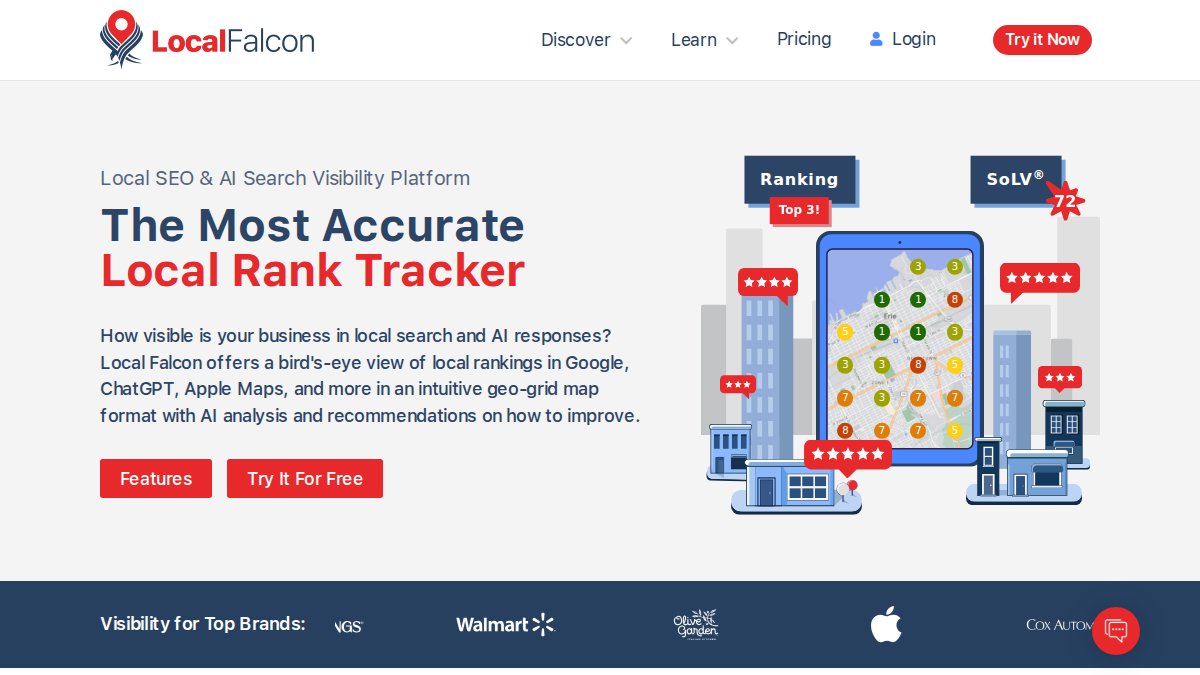
Local Falcon maps your Google Maps rankings across a grid of GPS coordinates, giving you an immediate visual picture of where you dominate and where you disappear. Starting at $24.99/month on a credit-based model, it works best as a client-facing reporting tool combined with a more operationally focused platform like BrightLocal, the visual output converts skeptical clients faster than any spreadsheet.
Pros: Most accurate visual representation of local rankings available; excellent for demonstrating ROI to clients.
Cons: The credit-based system becomes expensive with high-frequency scanning across multiple locations.
Whitespark: Granular Rank Tracking and Citation Building
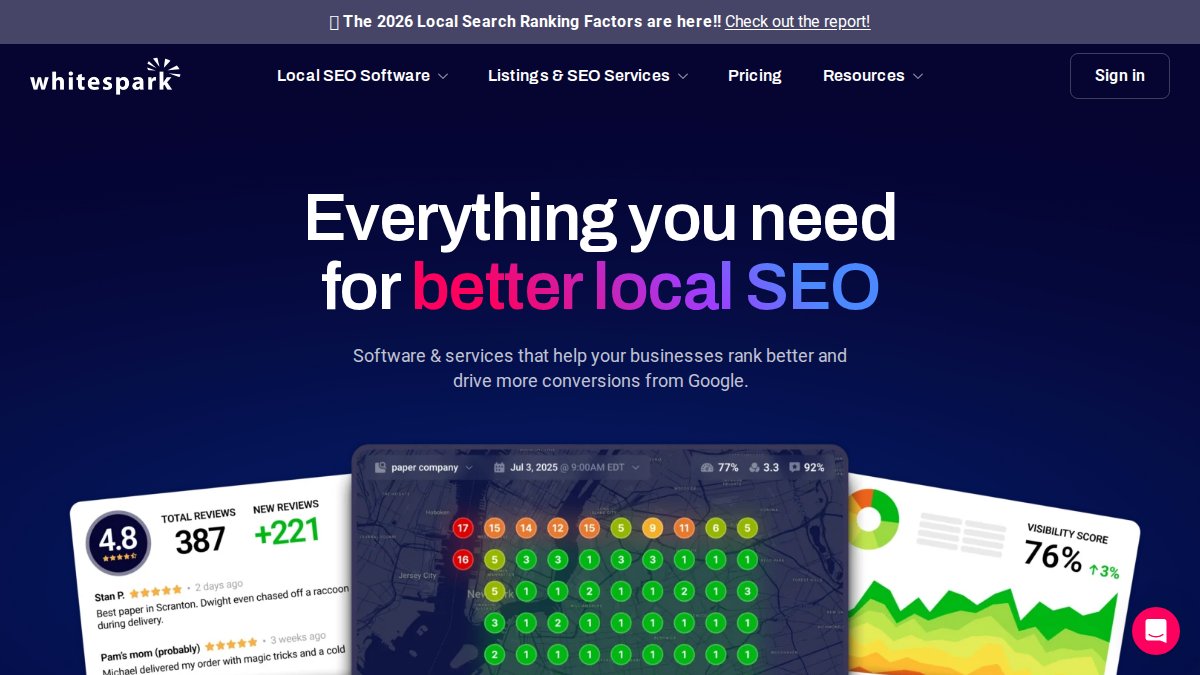
Whitespark has the deepest citation expertise of any tool in this list. Its Local Citation Finder identifies where competitors are listed that you are not, and its rank tracker provides granular geographic reporting that rivals tools costing three times as much. Entry starts at $1/month with flexible pay-per-service options. For businesses in competitive local markets, the granular NAP consistency audit often surfaces issues that automated tools miss entirely.
Pros: Industry-leading citation expertise; flexible pricing means you only pay for what you use.
Cons: Less polished interface can slow onboarding for less technical users.
GeoRanker: Coordinate-Based Competitive Intelligence
GeoRanker tracks rankings from specific GPS coordinates, surfaces competitor keyword opportunities, and identifies citation sources your competitors use that you do not. At $49/month, API access makes it a natural fit for agencies building custom reporting workflows.

Pros: Highly granular coordinate-based tracking; strong for identifying local ranking opportunities competitors overlook.
Cons: Steeper learning curve than tools like Local Falcon.
Online Reputation and Review Management: Birdeye, Synup, and Yext
Review signals directly influence local pack rankings, and the volume and recency of reviews affect how Google’s algorithm weights your listing. The three platforms below each take a different approach to review generation, monitoring, and response management.
Birdeye: Enterprise-Grade Review Generation at Scale
Starting around $349/month, Birdeye handles automated review generation via SMS and email, centralizes all incoming reviews and messages in a single inbox, manages local listings, and uses AI-powered sentiment analysis. For multi-location businesses and franchise networks, the scalability is unmatched. Deploying Birdeye for a single-location business is a common mistake, the ROI calculation simply does not work at that scale.
Pros: Extremely thorough review management features; genuinely scalable for large networks.
Cons: Entry price makes it inaccessible for most small businesses and solo practitioners.
Synup: The Agency Operating System for Reputation and Listings
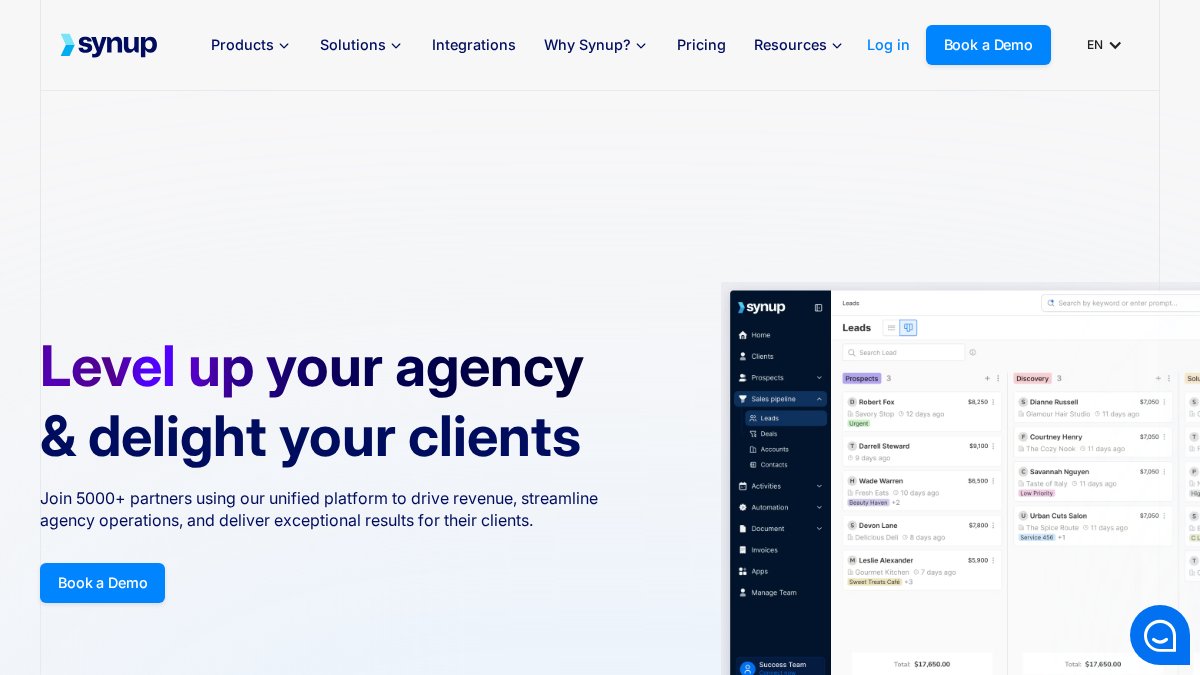
Synup positions itself as a replacement for multiple tools. At $79/month, it manages listings across 100+ directories, uses AI-powered review response and sentiment tracking, offers white-labeled client dashboards, and includes social media scheduling. For marketing agencies managing multiple clients, the consolidation value is significant.
Pros: Replaces multiple tools with one operating system; strong focus on agency scalability.
Cons: Single-location business owners will find it overpowered and overpriced.
Yext: Maximum Control for Multi-Location Brands
Yext’s Knowledge Graph syncs business data in real time across 200+ global services, including search engines, navigation apps, voice assistants, and social platforms. According to Yext’s platform documentation, any change to your business information propagates across all connected platforms simultaneously, eliminating the lag that causes NAP inconsistencies in traditional listing management. AI-powered review response, local page creation, and advanced conversion analytics make it the most comprehensive option available.
Pros: Unmatched reach and real-time data synchronization; powerful AI integration.
Cons: Significant cost and implementation complexity; contact-for-pricing means the budget conversation happens before you see a number.
Local SEO Audit Checklist: What Every Tool Should Help You Cover
A thorough local SEO audit checklist covers six core areas. Any tool you invest in should address at least three; the best stacks cover all six.
- NAP consistency: Business name, address, and phone number are identical across all directories, your website, and your GBP listing.
- Google Business Profile completeness: All categories, attributes, hours, photos, and service descriptions are populated and accurate.
- Citation volume and quality: You have citations on all major aggregators and relevant industry directories, with no duplicates.
- Review profile: You have a consistent flow of recent reviews, and you are responding to them within 48 hours.
- On-page SEO signals: Location pages include the city and service keywords in title tags, H1 headings, and schema markup.
- Competitor benchmarking: You know where your nearest competitors rank, what citations they have that you do not, and what their review velocity looks like.
Skipping the duplicate listing suppression step is one of the most damaging mistakes in local SEO. Duplicate GBP listings split your review count and confuse Google’s understanding of your business location, which directly suppresses local pack rankings.
How to Improve Local SEO Ranking: Stacking Tools for Maximum Impact
The current best practice is deliberate stacking: choosing two or three tools that complement each other’s strengths and cover each other’s gaps. The Web Maniacs approach treats tool selection as architecture, you need a foundation layer (listing management and GBP optimization), a tracking layer (rank monitoring and competitor benchmarking), and a reputation layer (review generation and monitoring). Gaps in any layer limit the effectiveness of the others.
 team of three people collaborating around a laptop and whiteboard covered in local SEO strategy notes, modern bright office with large windows, afternoon light](https://cdn.grandranker.com/articles/best-tools-for-local-seo-top-9-picks-for-2026-content-2-1781058165.jpg)
Agency vs. SMB Tool Stacks: Which Combination Works Best
For agencies managing multiple clients:
Combine BrightLocal as the operational core with Local Falcon for client-facing geo-grid visualizations, and add Synup if reputation management is a core service offering. This covers rankings, citations, review monitoring, and white-label reporting without paying enterprise prices.
For SMBs managing their own local presence:
Use Semrush Local if you are already doing organic SEO, or BrightLocal if local search is your primary focus. Add Whitespark’s citation finder for a one-time audit and cleanup. Total cost stays well under $100/month.
For enterprise and multi-location brands:
Yext for listing control and data synchronization, Birdeye for review management at scale, and Local Falcon or GeoRanker for competitive intelligence. The investment is significant, but the alternative is managing inconsistent data across hundreds of locations manually.
Budget-Friendly and Free-Tier Options Worth Knowing
Whitespark offers limited free searches in its Citation Finder, enough to run an initial gap analysis before committing to a paid plan. Semrush Local includes a free tier that lets you audit a single location’s GBP without spending anything. As documented in Google’s Business Profile Help Center, the GBP insights section provides performance data, search queries, direction requests, call clicks, that should inform any local SEO strategy before additional tools are layered on top. Start there, use Whitespark’s free citation finder for a one-time audit, and invest in one paid tool only after you have exhausted the free options.
Whitespark’s free citation finder is often enough to identify the top 10-15 citation gaps for a new local SEO client. Run it before recommending a paid citation building service; you may find the gap is smaller than expected.
Which Local SEO Tool Is Right for You? A Decision Framework
The right local SEO tool matches your operational context, not your feature wishlist. Use this framework to narrow your choice.
Step 1: Identify your primary problem. Is it ranking visibility, citation inconsistency, review volume, or listing management? Your biggest problem determines your primary tool.
Step 2: Assess your scale. Single location or multiple? Tools like Yext and Birdeye only make economic sense above a certain location threshold.
Step 3: Determine your technical capacity. GeoRanker and Whitespark reward users who can interpret data and act on it. If you need the platform to guide you, BrightLocal or Semrush Local are more appropriate starting points.
Step 4: Check integration requirements. If you are already in the Semrush ecosystem, Semrush Local is the obvious consolidation choice. If your CRM integrates with Birdeye, that changes the value calculation significantly.
Step 5: Run a trial before committing. Test rank tracking data against your own knowledge of your local rankings. If the numbers do not match reality, the tool is not calibrated correctly for your market.
According to BrightLocal’s Local Consumer Review Survey, businesses that actively manage their online reputation and maintain consistent local listings see meaningfully better local search visibility than those that do not. Local search visibility requires ongoing tracking, consistent citation management, active review generation, and regular competitive benchmarking. The best tool stack is the one you will actually use consistently, at a price point that makes that consistency sustainable.
Managing local SEO across multiple tools and platforms is genuinely complex, and most businesses do not have the time to do it well while running their core operations. Web Maniacs offers comprehensive Google Local Optimization services alongside results-driven digital marketing strategies, handling everything from GBP management to citation building and local search visibility improvements. Get started with Web Maniacs and build the kind of consistent local presence that turns map pack rankings into real customer connections.
Frequently Asked Questions
What are the most important local SEO tools for small businesses?
For small businesses, the best tools for local SEO cover four core needs: rank tracking, Google Business Profile management, citation building, and review monitoring. BrightLocal and Moz Local are strong starting points because they combine multiple functions at an accessible price. Whitespark is ideal if citation accuracy is a priority. Starting with one all-in-one platform before adding specialist tools keeps costs manageable while still improving local search visibility and map pack performance.
Is there a free tool for local SEO?
Yes. Semrush Local and Whitespark both offer free tiers with limited functionality, making them useful for businesses testing the waters. Google Search Console and Google Business Profile itself are free and essential starting points for any local SEO audit checklist. Free tiers typically cap the number of tracked locations or keywords, so they suit solo operators or early-stage businesses before upgrading to a paid plan that supports deeper rank tracking and citation management.
How do I track my local SEO rankings accurately?
To track local rankings accurately, use a tool that supports geo-specific data rather than broad national rankings. Local Falcon's geo-grid maps show exactly where your business appears in Google Maps across different neighborhoods. Whitespark's local rank tracker and GeoRanker both allow coordinate-based tracking. For a complete picture, pair a rank tracking tool with Google Business Profile Insights to monitor map pack impressions, direction requests, and call clicks alongside your keyword positions.
Do I need different tools for local SEO versus general SEO?
General SEO tools like Semrush or Moz handle backlink analysis, on-page SEO auditing, and keyword research well, but they lack the hyper-local features needed for local search marketing. Dedicated local SEO tools add NAP consistency checks, citation building, geo-grid rank tracking, and Google Business Profile optimization, none of which standard SEO platforms cover deeply. The most effective approach stacks a general SEO platform with at least one specialist local tool, especially for service-based businesses competing in the local pack.
What tools do agencies need for managing multiple local SEO clients?
Agencies managing multiple clients need platforms with white-label reporting, multi-location dashboards, and scalable pricing. BrightLocal offers white-label reports and agency-specific plans. Synup functions as a full agency operating system covering listings, reputation, and social management under one roof. For visual rank reporting clients love, Local Falcon's geo-grid scans are highly persuasive. Pairing an agency-focused platform like Synup or BrightLocal with a specialist rank tracker gives the best balance of scalability and precision for local search marketing.
This article was written using GrandRanker