
Local SEO Strategy: A 2026 Guide for Small Business
Table of Contents
- What Is a Local SEO Strategy?
- Why Local SEO Strategy Matters for Small Business
- How Local Search Works: Relevance, Proximity, and Prominence
- The Importance of NAP Consistency Across Your Online Presence
- Optimizing Your Google Business Profile for Local Visibility
- How to Improve Google Maps Ranking and Local Pack Placement
- Local SEO Checklist for Small Business Success
- Common Local SEO Mistakes and How to Avoid Them
Last Updated: August 16, 2026
What Is a Local SEO Strategy?
A local SEO strategy is the systematic approach to optimizing your online presence so your business ranks higher in local search results, Google Maps, and the local pack. It combines technical optimizations, content refinement, and reputation management to help potential customers in your area find you.
Unlike broader SEO, which targets a global or national audience, local SEO focuses on geographic relevance. When someone searches "plumber near me" or "coffee shops in [your area]," local SEO determines whether your business appears. For small businesses competing against larger chains, this is where you can actually win.
The core of any effective local SEO strategy rests on three pillars: relevance (does your business match what people are searching for?), proximity (how close are you to the searcher?), and prominence (how well-known and trusted is your business?). Get these right, and your visibility in local search results increases dramatically.
Web Maniacs helps local service businesses and retailers build and execute comprehensive local SEO strategies that drive qualified leads. Our approach combines Google Business Profile optimization, citation management, and location-specific content to ensure your business shows up where it matters most.
The biggest mistake small businesses make is treating local SEO as a one-time setup task. It’s not. Local search rankings require ongoing management, reviews need responses, citations need audits, and your business information must stay current across dozens of platforms.
Why Local SEO Strategy Matters for Small Business
Small businesses depend on local visibility to compete. According to research from Google’s local search insights, 76% of people who search for local businesses on their mobile device visit or call that business within 24 hours. That’s qualified foot traffic and phone inquiries going to your competitors if your local SEO strategy is weak.
A solid local SEO strategy generates consistent organic traffic without ongoing ad spend. You’re not paying per click; you’re paying once for optimization and reaping benefits for months. Local SEO also builds trust faster than national campaigns. When a customer sees your business in the local pack with positive reviews and consistent information across directories, they perceive you as established and legitimate, translating to higher conversion rates.
For contractors, service businesses, and retail shops, local SEO strategy is non-negotiable. Your customers search locally, not nationally. If you’re not optimized for local search, you’re invisible to the people most likely to buy from you.
How Local Search Works: Relevance, Proximity, and Prominence
Local search operates differently than traditional organic search. Google’s algorithm considers three primary ranking factors when determining which businesses appear in local search results and the Google Maps local pack.
Relevance answers: Does this business match what the searcher is looking for? Google examines your business category, keywords in your Google Business Profile, website content, and citations to determine if you’re actually a plumber or coffee shop. A miscategorized business will rank poorly regardless of other factors.
Proximity is straightforward: How close is the business to the searcher’s location? A plumber five kilometres away typically ranks higher than one 20 kilometres away, assuming relevance and prominence are similar. This is why your local SEO strategy must include accurate, consistent address information everywhere your business is listed.
Prominence reflects your business’s authority and trustworthiness. This includes the volume and quality of customer reviews, your citation history across trusted directories, backlinks to your website, and your overall online reputation. A business with 200 five-star reviews outranks a competitor with no reviews, even if proximity and relevance are equal.
Understanding these three factors shapes every decision in your local SEO strategy. Optimizing your Google Business Profile improves relevance and prominence. Ensuring your NAP (Name, Address, Phone) is consistent everywhere strengthens proximity signals. Managing reviews and building local citations boosts prominence.
Local search ranking isn’t a mystery. It’s the intersection of three measurable factors: relevance (right category and keywords), proximity (accurate location data), and prominence (reviews, citations, authority). Master these, and your local SEO strategy will work.
The Importance of NAP Consistency Across Your Online Presence
NAP, Name, Address, Phone, is the foundation of local SEO strategy. When your business information is inconsistent across the web, Google’s algorithm becomes confused about which version is correct, tanking your rankings.
Here’s what happens: Your Google Business Profile lists "123 Main Street," your Facebook page says "123 Main St.," your directory listings use "123 Main Street, Unit 2," and your website shows a different area code. Google treats these as potentially different businesses, fragmenting your prominence score.
NAP consistency is non-negotiable. Every platform where your business appears, Google Business Profile, local directories, social media, your website, email signatures, must show identical information:
- Business name (exactly as registered)
- Street address (same format, same abbreviations)
- Phone number (consistent formatting)
- Hours of operation (updated and accurate)
The most common mistake is inconsistent address abbreviations. "Street" vs. "St.," "Avenue" vs. "Ave.", these minor variations tell Google your information is unreliable. Choose one format and use it everywhere.
Auditing your NAP consistency takes time but pays dividends. Search for your business name plus your city across Google, Yelp, local directories, and industry-specific listings. Document every variation and systematically update each platform to match your official business registration.
Inconsistent NAP information can harm your local search visibility more than having no listings at all. Google interprets conflicting data as unreliability. Always prioritize consistency over having your business listed everywhere.
Optimizing Your Google Business Profile for Local Visibility
Your Google Business Profile is the single most important asset in your local SEO strategy. It’s where Google displays your business information directly in search results and maps.
Complete every field accurately. Your business category must match what you actually do. If you run a coffee shop that serves light meals, add the secondary category for restaurant or café. Use all available category options to improve relevance signals.
Your business description should be 750-1,000 characters of clear, keyword-rich information about what you do and why customers should choose you. Include local keywords naturally: "We serve the [area] community with [service]" works better than generic descriptions.
Add high-quality photos. Google Business Profile listings with photos get significantly more engagement than those without. Include photos of your storefront, team, products or services in action, and workspace. Update these regularly; fresh visuals signal that your business is active.
Post updates at least twice per month. Posts appear directly in search results and maps, giving potential customers immediate reasons to click through to you.
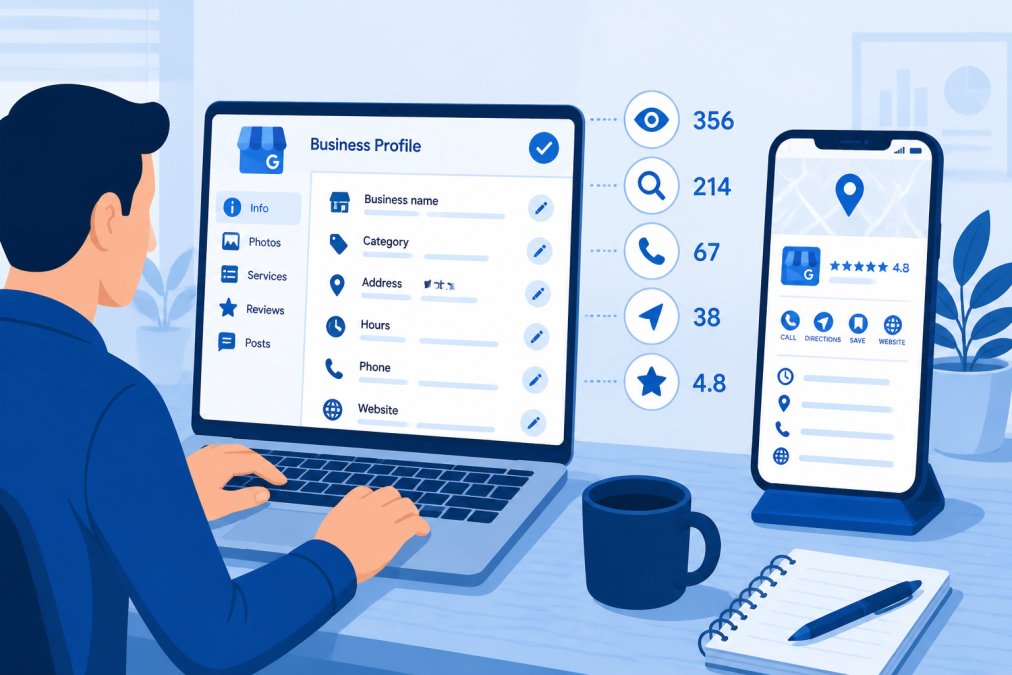
Respond to every review, positive and negative. Google’s algorithm considers review response rates as a prominence factor. Negative reviews handled well actually build trust; potential customers see that you care enough to address concerns.
Your local SEO strategy should include monthly Google Business Profile maintenance: verify information is current, add new photos, post updates, and respond to reviews. This consistency signals to Google that your business is active and trustworthy.
How to Improve Google Maps Ranking and Local Pack Placement
The local pack, those three business listings at the top of Google Maps results, is prime real estate. Appearing in the local pack can increase your click-through rate by 40% or more compared to lower positions.
Improving your Google Maps ranking requires focus on relevance, proximity, and prominence. Proximity becomes more dominant for map rankings; Google prioritizes businesses physically closest to the searcher. Relevance depends on category accuracy and keyword optimization. Prominence relies heavily on review volume and recency.
Build a consistent local citation strategy. Citations are mentions of your business name, address, and phone number on other websites, local directories, industry listings, and review sites. Each citation is a vote of confidence in your business’s legitimacy. Focus on high-authority directories first: Google Business Profile, Yelp, local chamber of commerce directories, industry-specific listings, and regional business directories. Getting listed on 15-20 authoritative directories significantly improves your Google Maps ranking.
Encourage customers to leave reviews. The quantity, quality, and recency of reviews directly impact your local pack placement. A business with 50 recent reviews outranks one with 10 older reviews. Implement a simple system: follow-up emails after service completion, QR codes in your physical location, or direct links on your website.
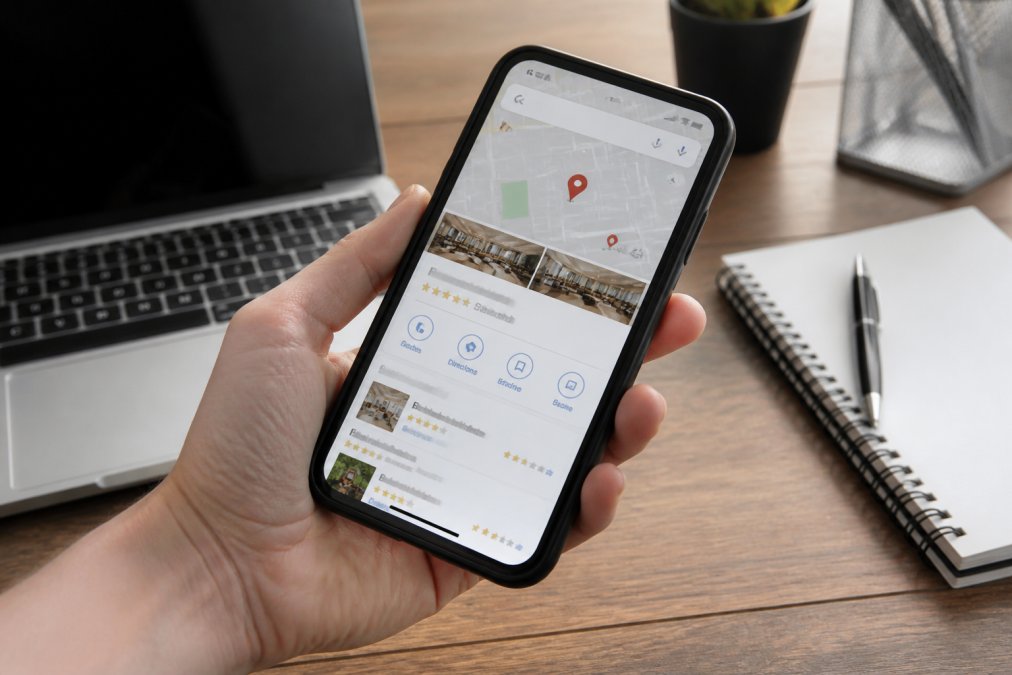
Respond to reviews consistently. This signals to Google that your business is actively engaged and shows potential customers that you value feedback. Build local backlinks through sponsoring local events, partnering with community organizations, or contributing expert commentary to local news. These activities generate natural backlinks that improve your prominence.
Your local SEO strategy for Google Maps ranking should prioritize: category accuracy, citation consistency, review volume and recency, and local backlink building.
Local SEO Checklist for Small Business Success
A practical local SEO checklist keeps your strategy organized and ensures nothing falls through the cracks.
| Task | Frequency | Owner | Status |
|---|---|---|---|
| Audit NAP consistency across all platforms | Quarterly | Marketing | [ ] |
| Update Google Business Profile information | Monthly | Marketing | [ ] |
| Post updates to Google Business Profile | 2x per month | Marketing | [ ] |
| Respond to customer reviews | Weekly | Management | [ ] |
| Add new photos to Google Business Profile | Monthly | Marketing | [ ] |
| Audit local citations for accuracy | Quarterly | Marketing | [ ] |
| Add business to new local directories | Monthly | Marketing | [ ] |
| Build local backlinks through partnerships | Ongoing | Marketing | [ ] |
| Monitor local search rankings | Monthly | Marketing | [ ] |
| Optimize website for local keywords | Quarterly | Marketing/Web | [ ] |
Use this checklist as your operational guide. Assign ownership for each task so nothing gets missed. Track completion monthly. This consistency compounds; after three months of following this checklist, you’ll see measurable improvements in local search visibility.
Many small businesses underestimate the power of consistent execution. Your local SEO strategy doesn’t require complex technical skills or expensive tools. It requires discipline: doing the fundamentals regularly and measuring what works.
Common Local SEO Mistakes and How to Avoid Them
The most damaging local SEO mistakes are preventable.
Inconsistent business information tops the list. Businesses list their address differently on different platforms, use multiple phone numbers, or change their business name slightly across listings. This fragmentation destroys local search visibility. The fix: audit your NAP information across every platform and standardize everything.
Ignoring reviews is another critical mistake. Some business owners avoid responding to negative reviews, thinking silence is better than engagement. Actually, how you respond to criticism matters more than the criticism itself. Professional, solution-focused responses to negative reviews build trust. The fix: implement a review management system and respond to every review within 48 hours.
Neglecting local keywords in your website content and Google Business Profile description is surprisingly common. Businesses write generic descriptions that could apply to any competitor. Your local SEO strategy should include location-specific keywords: "serving [area]," "local [service]," "near [landmark]." The fix: research what local customers actually search for and incorporate those terms naturally.
Incomplete Google Business Profile, missing hours, no photos, sparse description, signals that your business isn’t serious about local visibility. Google’s algorithm prioritizes complete, detailed profiles. The fix: treat your Google Business Profile as a critical marketing asset. Complete every field and add 10-15 high-quality photos.
Building citations on low-authority directories wastes time and provides minimal ranking benefit. Quality matters far more than quantity. The fix: focus on high-authority directories relevant to your industry and location. 20 citations on trusted platforms beat 200 on spam directories.
Not monitoring local search rankings means you won’t know if your local SEO strategy is working. Local search is competitive; your rankings can shift monthly. The fix: track your rankings for 10-15 key local keywords monthly and adjust your strategy based on the data.
The common thread: these mistakes stem from treating local SEO strategy as a one-time project rather than an ongoing practice. Small businesses that commit to monthly maintenance consistently outrank competitors who optimize sporadically.
Local SEO strategy determines whether your business thrives in local search visibility. The businesses ranking in the local pack have simply executed a consistent local SEO strategy that prioritizes relevance, proximity, and prominence. Web Maniacs helps small service businesses, retailers, and contractors build local SEO strategies that generate consistent qualified leads through Google Maps and local search. Our approach combines Google Business Profile optimization with citation management and local keyword strategy tailored to your service area. Get started with Web Maniacs and see how a professional local SEO strategy transforms your local search visibility and customer inquiries.
Frequently Asked Questions
What are the core components of a local SEO strategy?
A local SEO strategy comprises five key elements: optimizing your Google Business Profile with complete, accurate information; maintaining NAP (Name, Address, Phone) consistency across all online directories and citations; building local citations and directory listings; managing customer reviews and online reputation; and creating geo-targeted content that speaks to your local audience. Each component works together to improve your visibility in local search results and the Google local pack.
How long does it take to see results from a local SEO strategy?
Most businesses begin seeing measurable improvements in local search visibility within 4-12 weeks, depending on competition level and how thoroughly you implement the strategy. Quick wins like completing your Google Business Profile can drive results within 2-4 weeks. However, building strong local authority through citations, reviews, and local link building takes 3-6 months for noticeable ranking improvements. Consistent effort and ongoing optimisation accelerate results.
Can I manage my own local SEO effectively as a small business?
You can handle basic local SEO tasks yourself, such as claiming and optimizing your Google Business Profile, ensuring NAP consistency, and encouraging customer reviews. However, a comprehensive local SEO strategy, including advanced citation building, schema markup implementation, local link acquisition, and content optimisation, requires technical expertise and ongoing monitoring. Many small businesses find that partnering with a digital agency delivers faster, more reliable results while freeing you to focus on running your business.
How does local SEO differ from traditional organic SEO?
Local SEO targets customers searching for products or services within a specific geographic area, whereas traditional organic SEO focuses on broader, national searches. Local SEO prioritises proximity, relevance, and local authority signals like Google Business Profile optimisation, local citations, and customer reviews. Traditional SEO emphasises domain authority, backlinks, and content depth. For service businesses and retailers with a physical location, local SEO typically delivers faster, more qualified leads than broad organic strategies.
This article was written using GrandRanker