5 Best Mobile App Development Platforms for NZ Startups
Table of Contents
- Quick Comparison: 5 Best Mobile App Development Platforms for Startups in NZ
- How We Evaluated These Platforms
- 1. FlutterFlow: Low-Code Cross-Platform Development with Code Export
- 2. Bubble: No-Code Web and Mobile Apps Without Writing Code
- 3. Glide: Transform Spreadsheets Into Data-Driven Applications
- 4. React Native: Open-Source Framework for High-Performance Native Apps
- 5. Ionic: Web Technologies for Fast Hybrid Mobile App Development
- Mobile App Development Cost in New Zealand: What to Budget
5 Best Mobile App Development Platforms for NZ Startups
Last Updated: July 29, 2026
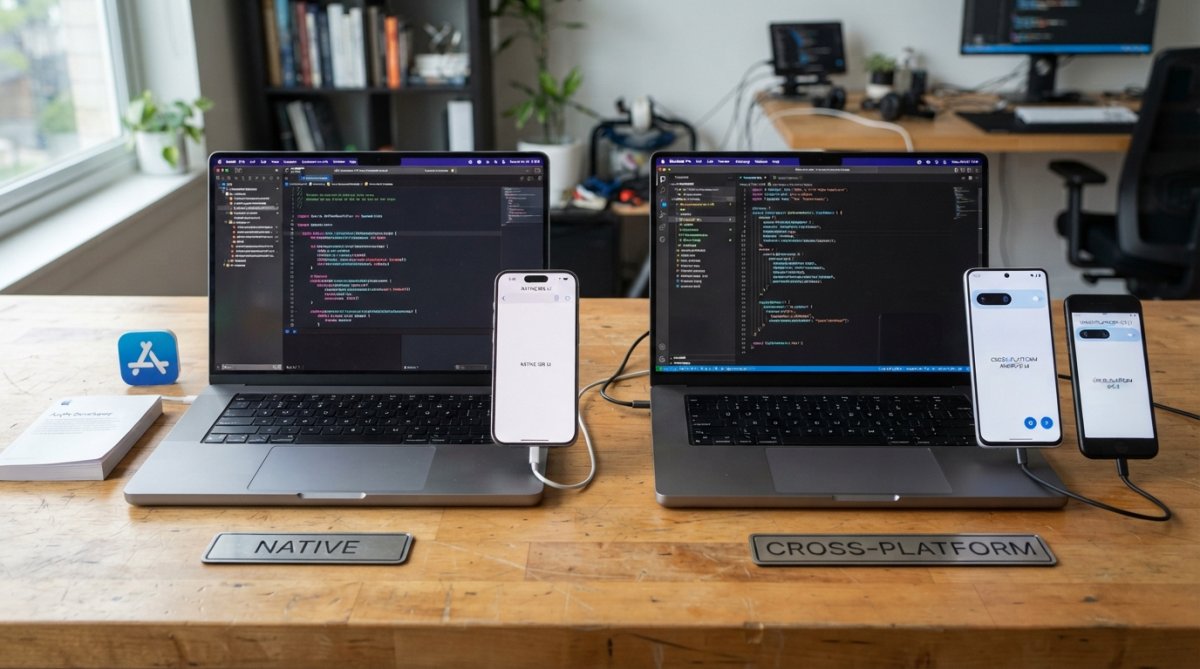
Building a mobile app as a startup in New Zealand requires speed, affordability, and flexibility to pivot. The 5 best mobile app development platforms for startups in NZ address these needs differently, from no-code visual builders to open-source frameworks offering complete control. At Web Maniacs, we’ve worked with dozens of NZ startups navigating these choices, and the right platform can cut your time-to-market in half while reducing development costs significantly.
Some platforms let non-technical founders build apps without writing code. Others give experienced developers native performance and flexibility. Understanding which category fits your team’s skills and timeline matters far more than chasing the "best" tool in abstract terms.
Quick Comparison: 5 Best Mobile App Development Platforms for Startups in NZ
| Platform | Type | Starting Price | Best For | Key Advantage |
|---|---|---|---|---|
| FlutterFlow | Low-code | NZ$49/month | Cross-platform rapid deployment | Exportable Flutter code for ownership |
| Bubble | No-code | NZ$49/month | Web and mobile SaaS apps | Flexible usage-based pricing scales with growth |
| Glide | No-code | NZ$32/month | Spreadsheet-based data apps | Fastest time-to-launch for simple tools |
| React Native | Open-source | Free | High-performance native apps | Single JavaScript codebase, large community |
| Ionic | Open-source | Free | Hybrid apps using web skills | Familiar HTML/CSS/JavaScript stack |
How We Evaluated These Platforms
We assessed each platform across five dimensions: time to first working prototype, total cost of ownership for a typical NZ startup, learning curve for teams without mobile experience, ability to scale without rebuilding, and customisation flexibility.
Low-code and no-code platforms prioritise speed, you can launch something functional in days or weeks without specialist developers. Open-source frameworks like React Native and Ionic demand more technical skill upfront but give you native performance and complete control.
The biggest mistake startups make is choosing a platform based on feature count rather than whether it matches their team’s actual skills. A powerful low-code platform is useless if your team wants to build with code, and an open-source framework becomes an anchor if you don’t have developers who know JavaScript or React.
1. FlutterFlow: Low-Code Cross-Platform Development with Code Export
FlutterFlow stands out because it gives you low-code speed without vendor lock-in. You build mobile apps visually using drag-and-drop, but the platform generates real Flutter code that you own and can export. If you outgrow the visual builder, you can take the codebase and continue developing with standard Flutter tools.
The platform handles time-consuming tasks: UI design, state management, API integration, and app store deployment. A typical NZ startup can move from wireframe to a live app in the Apple App Store and Google Play Store within 4-6 weeks.
FlutterFlow pricing starts at NZ$49 per month for the Basic plan (billed annually), which includes deployment. The code export feature means you’re learning real Flutter development patterns, not a proprietary language. If you hire a Flutter developer later, they can read and modify your codebase immediately.
FlutterFlow’s visual builder handles most common app patterns beautifully, but highly custom animations or platform-specific features still require dropping into code. For 80% of startup apps, e-commerce, service marketplaces, content platforms, simple SaaS tools, this isn’t a constraint.
2. Bubble: No-Code Web and Mobile Apps Without Writing Code
Bubble lets you build complete applications, database, logic, user interface, integrations, without touching code. You define workflows, database schemas, and UI elements using drag-and-drop tools and configuration panels.
For non-technical founders or small teams without developers, Bubble eliminates the biggest barrier: you don’t need to hire someone who knows JavaScript, databases, or deployment infrastructure. A solo founder can build a functional SaaS product, test it with real users, and iterate based on feedback.
Bubble’s pricing starts at NZ$49 per month for the Starter plan (billed annually) for web apps. Usage-based pricing means costs scale with traffic and database size, ideal for startups paying for growth as it happens.
Bubble’s strength emerges when integrating third-party services. The platform has a massive plugin ecosystem, payment processors, CRM systems, communication APIs, with pre-built connectors handling authentication and data flow. Building a marketplace that accepts payments and sends automated notifications takes days in Bubble, not weeks.
For NZ startups building their first product or validating a business idea quickly, Bubble is exceptionally strong.
3. Glide: Transform Spreadsheets Into Data-Driven Applications
Glide inverts typical app development. Instead of building a database schema and then a UI, you start with data you already have, a Google Sheet, Excel file, or Airtable base, and Glide transforms it into a working mobile and web app.
This approach is remarkably fast for specific problems: internal tools, customer portals, inventory management systems, and simple data collection apps. A field service company can build a job dispatch app. A nonprofit can create a volunteer scheduling tool. A retail business can build an inventory app for staff.
Glide pricing starts at NZ$32 per month for the Explorer plan (billed annually), the lowest entry point here. The free plan is genuinely useful for prototyping, you get a full-featured app builder with limits on user count and update volume.
A spreadsheet that took weeks to maintain manually becomes a live app in a day. Glide handles the database layer automatically by syncing with your existing spreadsheet, eliminating entire categories of technical decisions.
Glide excels at data-centric apps but struggles with apps requiring complex custom logic or integration with multiple external systems. For NZ startups with a specific data management problem and limited technical resources, Glide is often the fastest path from idea to working product.
4. React Native: Open-Source Framework for High-Performance Native Apps
React Native is an open-source framework maintained by Meta and the community. You write JavaScript once and it compiles to native iOS and Android apps that perform like apps written in Swift or Kotlin. There’s no vendor lock-in, no monthly subscription, and no proprietary tools controlling your app.
For experienced development teams, this approach is profound. You’re not constrained by a visual builder’s capabilities. You can integrate with any third-party library in the JavaScript ecosystem and optimise performance to the metal.
React Native projects typically cost between NZ$30,000 and NZ$80,000 for simple MVPs, with costs in developer time rather than platform fees. A skilled React Native developer in Auckland or Wellington typically charges NZ$80-150 per hour, and a simple app MVP takes 8-12 weeks with one developer.
The JavaScript/React community is enormous, meaning there’s a library for almost every problem. This ecosystem abundance means you spend less time building infrastructure and more time on differentiating features.
React Native’s real strength isn’t for solo founders or non-technical teams. It’s for startups with some development capacity needing the performance and flexibility that only native code provides.
5. Ionic: Web Technologies for Fast Hybrid Mobile App Development
Ionic lets you build mobile apps using HTML, CSS, and JavaScript, technologies web developers already know. You write your app once using standard web technologies, and Ionic packages it as native iOS and Android apps running in a WebView container.
The advantage is accessibility. Web developers can immediately start building mobile apps without learning new languages or frameworks. You can hire developers more easily because web development skills are more common than mobile-specific skills.
Ionic’s core framework is free and open-source. Your costs are primarily in developer time, not platform fees. The framework integrates with popular JavaScript frameworks like Angular, React, and Vue, giving you flexibility in code structure.
Ionic apps run in a WebView, meaning they don’t have the same access to device hardware as truly native apps. For most use cases, content apps, productivity tools, service marketplaces, this limitation is irrelevant.
Ionic is the right choice for teams with web development expertise wanting to extend that expertise into mobile without learning platform-specific languages.
Mobile App Development Cost in New Zealand: What to Budget
Understanding true app costs requires separating platform costs from development costs. A low-code platform like Bubble or FlutterFlow might cost NZ$50-100 per month, but you’re still investing significant time. An open-source framework like React Native has zero platform costs, but you’re paying developer salaries or contractor rates.
For a simple MVP with basic functionality, user authentication, a few screens, and one or two integrations, budget between NZ$8,000 and NZ$25,000 using a low-code platform with in-house resources, or NZ$30,000 to NZ$60,000 hiring a contractor.
For a more substantial app with custom features, complex workflows, and multiple integrations, budget NZ$60,000 to NZ$150,000 for a production-ready app.
Hidden costs often surprise startups: hosting infrastructure, third-party service subscriptions (payment processing, analytics, push notifications), app store fees, and ongoing maintenance. A modest app might incur NZ$200-500 per month in recurring costs once live.
The most common cost mistake is underestimating maintenance and support. A live app requires ongoing updates to fix bugs, maintain compatibility with new OS versions, and add features based on user feedback. Budget at least 15-20% of your initial development cost annually for maintenance.
Which Platform Should You Choose? Decision Framework
The right platform depends on three factors: your team’s technical skills, your timeline to launch, and your budget constraints.
If you have no developers and need to launch within 8 weeks: Glide or Bubble are your fastest paths. Glide is best if your app is primarily data-centric (inventory, forms, scheduling). Bubble is better if you need custom workflows or user authentication.
If you have one or two web developers and want to control your codebase: React Native or Ionic let you use existing JavaScript skills. React Native is better if performance matters or if you need native device features. Ionic is better if you want to share code between web and mobile versions.
If you want low-code speed with code flexibility: FlutterFlow bridges this gap. You get visual development speed with the ability to export and customise the underlying code.
If you’re hiring a development team: React Native or custom native approaches become viable. The team can optimise for performance and customisation in ways low-code platforms cannot match.

Most startups should prioritise speed and validation. You can always rebuild on a stronger platform once you’ve proven the market wants what you’re building.
Building a mobile app as a NZ startup no longer requires choosing between speed and quality. The 5 best mobile app development platforms for startups in NZ address different needs, and the right choice depends on your team’s skills and timeline. Web Maniacs helps startups navigate this decision by assessing your specific requirements and recommending the platform that aligns with your goals. Our team has guided startups through every platform in this guide and can help you avoid costly mistakes. Get started with Web Maniacs and move from idea to live app in weeks, not months.
Key Takeaways
-
Low-code platforms (FlutterFlow, Bubble, Glide) prioritise speed and accessibility, letting non-technical founders launch in weeks. Choose based on whether your app is data-centric (Glide), workflow-heavy (Bubble), or needs code export flexibility (FlutterFlow).
-
Open-source frameworks (React Native, Ionic) require developer expertise but offer better performance, customisation, and cost efficiency at scale. React Native is best for high-performance native apps; Ionic is best for teams with web development skills.
-
Time-to-market matters more than feature perfection for startups. A working MVP launched in 6 weeks teaches you more than a perfect app launched in 6 months.
-
Total cost of ownership includes platform fees, developer time, hosting, and maintenance. Budget 15-20% of your initial development cost annually for ongoing support.
-
Your team’s existing skills should drive the platform choice. Hiring new developers to use a particular platform is more expensive than using skills your team already has.
Frequently Asked Questions
How much does it cost to develop a mobile app for a startup in New Zealand?
Mobile app development costs in NZ vary significantly based on platform choice and complexity. No-code platforms like Glide start from NZ$32/month, while low-code solutions such as FlutterFlow begin at NZ$49/month. Custom development using React Native or hiring local developers typically ranges from NZ$15,000 to NZ$250,000+ depending on features, team size, and project scope. Budget also depends on whether you choose cross-platform or native development approaches.
What are the benefits of using a no-code or low-code platform for app development in NZ?
No-code and low-code platforms accelerate time-to-market, reduce reliance on expensive developers, and lower initial development costs. They enable rapid prototyping and MVP creation, critical for NZ startups testing market fit. Platforms like Bubble and Glide make app development accessible to non-technical founders. Low-code solutions like FlutterFlow offer code export, giving you flexibility and ownership. These approaches reduce technical debt and allow you to launch quickly while maintaining the option to scale with custom development later.
Should a New Zealand startup choose native or cross-platform app development?
Cross-platform development is typically better for NZ startups with limited budgets. Frameworks like React Native and Flutter (via FlutterFlow) let you build for both iOS and Android from a single codebase, reducing costs and development time significantly. Native development offers superior performance and user experience but requires separate teams for each platform. Choose cross-platform if you're bootstrapped or pre-seed; native development makes sense once you have funding and need premium performance or platform-specific features for your user base.
What are the key factors to consider when choosing an app development platform for a startup?
Evaluate your team's technical skills, budget, time-to-market needs, and long-term scalability requirements. Consider whether you need code ownership (favours React Native, FlutterFlow with export), rapid deployment (Bubble, Glide), or enterprise features. Assess post-launch maintenance costs and support availability. For NZ startups, prioritise platforms with transparent pricing, strong documentation, and active communities. Factor in whether you'll need to integrate with existing systems, handle complex workflows, or maintain the app independently after launch.
Are there government grants or funding available for app development startups in New Zealand?
NZ startups can access support through Callaghan Innovation, which offers R&D tax credits and grants for tech development. The Government's Business Growth Fund and regional economic development initiatives may also support digital innovation. Many NZ councils offer startup support programmes. However, most grants are competitive and require demonstrable market potential. Consider combining grant funding with bootstrapping strategies like MVP development on no-code platforms to extend your runway and prove concept viability before seeking larger investment rounds.
External Resources
For deeper guidance on mobile app development in New Zealand, explore these authoritative sources:
[EXTERNAL_LINK: Google’s guide to app development best practices | developers.google.com]
[EXTERNAL_LINK: New Zealand Tech Industry Report 2026 | techalliance.nz]
[EXTERNAL_LINK: Flutter framework documentation and performance benchmarks | flutter.dev]
This article was written using GrandRanker